
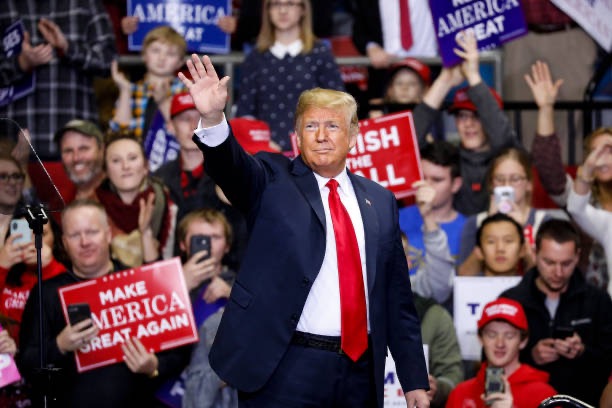
Donald Trump’s Shows Tendencies Toward Authoritarianism[i]
In the arena of American politics, few figures are as polarizing as Donald Trump, the 45th president of the United States. Numerous commentators, academics, and analysts have debated his political style, notably his tendency towards authoritarianism. Through an examination of his own speeches and recent news reports, one may discern a recurring theme of affinity for strongman leadership that has defined much of his political career.
Trump’s admiration for prominent autocratic leaders has been a subject of frequent news coverage. In one example from a Fox News interview in July 2020, Trump made headlines when he stated: “It’s interesting, the relationship I have with [Vladimir Putin, Xi Jinping, and Kim Jong Un] is, in a certain way, really great… I get along with them, they get along with me.” His congratulatory call to Turkish President Tayyip Erdogan in 2019 on winning a disputed election, as reported by The New York Times, raised eyebrows, as did his positive comments about North Korean leader Kim Jong Un. These incidents are often cited as evidence of his admiration for autocratic methods, and perhaps, a predilection to glorify personal relationships over democratic norms.
When analyzing Trump’s speeches, one cannot overlook his recurring pattern of undermining institutions and systems typical of democratic societies. For instance, his constant attacks on media outlets, branding them as “fake news,” aimed to delegitimize the press – one of the key institutions that keep a check on political power in democratic societies. In a similar vein, his refusal to accept the 2020 election results and subsequent encouragement of the Capitol riots undermined the fundamental democratic principle of peaceful transfer of power.
Trump has demonstrated on many occasions and in different ways his attraction to dictators. Trump’s attraction to dictators and authoritarians may stem from shared policy objectives. In some cases, Trump may have found common ground with these leaders on certain issues, such as immigration control, trade protectionism, or national security. The greatest fear is that Trump finds affinity to dictators is because his deepest desire is to be one.
Trump’s attraction to dictators and authoritarians could also be influenced by his emphasis on personal relationships and his belief in his power of negotiation. Trump’s admiration for strong leaders also manifests in his emphasis on personal relationships and the belief that his direct engagement and negotiation can lead to positive outcomes. He has expressed a preference for leaders who are assertive, make decisions unilaterally, and are not constrained by democratic processes.
According to political scientist Erica Frantz, who specializes in authoritarianism, leaders like Trump and certain dictators often share a “strongman persona” that resonates with a segment of the population (Frantz, 2020). This affinity may be one possible reason for the attraction between Donald Trump and dictators/authoritarians is their shared leadership style. Trump thinks of himself as a strong leader who values decisiveness and control. Similarly, many dictators and authoritarians exhibit a strong, dominant leadership style that appeals to those who prefer a more forceful approach to governance.
Another factor that may contribute to Trump’s attraction to dictators and authoritarians is his admiration for power and control. Trump has expressed admiration for leaders who exert strong control over their countries, often praising their ability to get things done and make decisions un attention. I want my people to do the same” (The Guardian, 2018). This statement reflects Trump’s admiration for Kim’s ability to command loyalty and control over his people. (The Guardian, 2019).
Trump has shown support for Turkish President Recep Tayyip Erdogan, despite concerns about his increasingly authoritarian rule. After a failed coup attempt in Turkey in 2016, Trump called Erdogan to offer his support, and he has praised Erdogan’s handling of the situation (The New York Times, 2016). This demonstrates Trump’s willingness to align himself with leaders who consolidate power, even in the face of criticism.

Trump’s rhetoric often embodies what political theorist Juan Linz describes as the characteristics of an authoritarian regime: limited political pluralism, reliance on a personalistic leader, and a minimal social mobilization. His speeches are frequently filled with divisive language that seeks to suppress dissenting voices. For instance, his open hostility toward the Black Lives Matter movement and conflation of protestors with domestic terrorists have served to limit political pluralism, central to any functioning democracy.
Throughout his presidency, Trump often expressed admiration for Russian President Vladimir Putin. He praised Putin’s strong leadership style and expressed a desire to have a closer relationship with him. Trump referred to Putin as a “strong leader” and downplayed concerns about Putin’s authoritarian tendencies (The Washington Post, 2020).
Trump’s Admiration for Vladimir Putin
Donald Trump has expressed his admiration for Vladimir Putin’s eadership style in several ways:
1. Verbal Praise: Trump publicly praised Putin on multiple occasions, often referring to him as a “strong leader” or a “great leader.” He commended Putin’s ability to maintain control over Russia and his effectiveness in dealing with political opponents.
2. Desire for a Closer Relationship: Throughout his presidency, Trump expressed a desire to improve the relationship between the United States and Russia and develop a closer personal bond with Putin. He believed that a positive relationship with Putin could lead to better cooperation on various issues, including counterterrorism and nuclear arms contr3. Downplaying Authoritarian Concerns: During his presidency Trump downplayed concerns about Putin’s authoritarian tendencies. Despite evidence of human rights abuses and restrictions on freedom of the press in Russia, Trump often dismissed or minimized these concerns, focusing instead on what he views as Putin’s strong leadership qualities.
4. Emphasis on Direct Engagement: Trump emphasized the importance of direct engagement and personal relationships in international diplomacy. He believed that establishing a rapport with Putin was crucial for effective communication and problem-solving, even if it meant overlooking or downplaying concerns about Putin’s leadership style.
It is important to note that while Trump expressed admiration for Putin’s leadership style, his views were not universally shared and were a subject of controversy and criticism. Some critics argued that Trump’s public admiration for Putin undermined American democratic values and failed to address concerns about Russia’s actions on the international stage.
Political Concerns about Trump’s Admiration of Putin
Trump’s admiration for Putin’s leadership style also faced criticisms and raised concerns such as:
1. Authoritarianism and Human Rights: Critics were concerned that by praising Putin, Trump was ignoring or downplaying human rights abuses and the erosion of democratic institutions in Russia.
2. National Security Concerns: Some argued that Trump’s admiration for Putin could compromise U.S. national security interests, particularly if it resulted in a lenient stance towards Russia’s aggressive actions or interference in U.S. elections. For instance, early in 1917 President Trump revealed “highly classified information” to two top Russian officials during a controversial Oval Office meeting last week, according to a report from The Washington Post.
3. Undermining Allies: Trump’s approach to Russia raised concerns that he might prioritize a close relationship with Putin at the expense of traditional U.S. allies, potentially weakening alliances and partnerships.
4. Lack of Transparency: Trump’s friendly stance towards Putin and his reluctance to criticize Russian actions led to concerns about transparency and whether he was acting in the best interests of the United States. The controversial Helsinki Summit in July 2018 between Presidents Donald Trump and Vladimir Putin sparked significant debate about Trump’s affinities toward autocratic leadership and, in particular, towards Putin. This concern was primarily driven by Trump’s seemingly deferential demeanor towards Putin and his public contradiction of U.S. intelligence agencies, even downplaying America’s intelligence assessment.
In the ensuing joint press conference following their closed-door meeting, Trump appeared to reject the conclusion of the U.S. intelligence community that Russia had interfered in the 2016 American Presidential Election. Instead, he stated: “President Putin says it’s not Russia. I don’t see any reason why it would be.” This dismissal of a consensus reached by his intelligence community in favor of Putin’s denial raised eyebrows about his trust in Putin and, potentially, admiration for his autocratic management style.
Trump’s willingness to apparently decouple himself from the U.S. intelligence community may be seen by some as an example of his affinity toward Putin’s style of governance. From a certain perspective, this approach mirrors an autocratic strategy where a leader purposely distances himself from established institutions to consolidate power. Putin has been known to exert personalistic control over Russia’s institutions, and he regularly challenges the concept of pluralistic input in decision-making, a feature shared in autocracy.
These criticisms and concerns highlighted the need for careful examination of the potential consequences of Trump’s admiration for Putin’s leadership style and the impact it could have on U.S. foreign policy and democratic values.
Trump’s Admiration for Recep Tayyip Erdogan
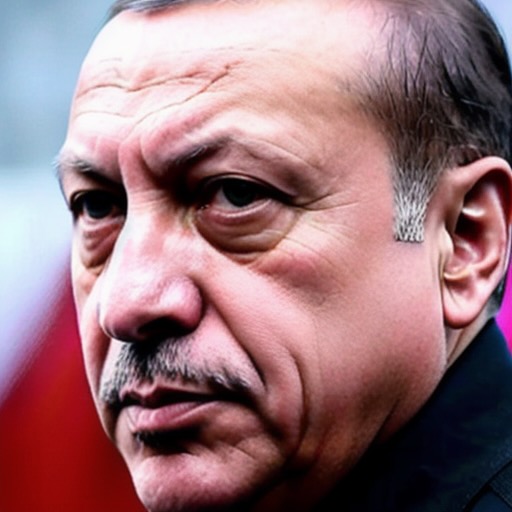
Recep Tayyip Erdogan, the current President of Turkey, is a dominant figure in Turkish politics. A sea of diverse portrayals emerge from a review of news articles, reports, and academic writings that, together, paint a multidimensional image of the leader. They depict a man treading the line between a democratic leader and an autocrat, with a fierce determination to solidify his legacy and influence over Turkey’s political landscape.
Erdogan started his political journey as the Mayor of Istanbul in the ’90s. His tenure was lauded for his pragmatism and efficient urban management, as detailed by multiple local and international news sources. From this platform, Erdogan catapulted himself into national politics, becoming Prime Minister in 2003 as the leader of the Justice and Development Party (AKP).
Throughout his time as Prime Minister and subsequently as President (a position he took over in 2014), Erdogan was lauded for his initial economic successes. As noted by Business Insider and the Economist, Turkey enjoyed a period of economic growth under his early leadership, with significant investments in infrastructure, healthcare, and education that raised Turkey’s global profile.
Erdogan’s tenure has also cultivated an image of a leader deeply ingrained in religious-conservatism advocacy. As The Guardian notes, he has consistently sought to reverse several secularist policies of the Turkish state, emphasizing a more significant role for Islam in public life.
However, more recently, global newspapers such as The New York Times, The Washington Post and The Guardian have described Erdogan as demonstrating increasingly autocratic tendencies. These have been highlighted by a diminishing tolerance for dissent, with the repression of political opposition, media censorship, and the detainment of journalists reportedly becoming more commonplace.
In 2016, Erdogan’s reaction to a coup attempt further cemented his authoritarian image, with a sweeping purge of alleged conspirators from a wide range of professions. Erdogan was accused of using the coup as an excuse to consolidate power, as he replaced thousands of judges, academics, and public workers with his loyalists, as reported by Al Jazeera and Reuters.
Also shaping his image internationally have been his aggressive foreign policies. Erdogan’s military interventions in Syria and Libya, his country’s strained relations with Greece, and the support of Azerbaijan in its conflict with Armenia have painted a picture of a hardliner leader.
With his ambitious Istanbul Canal project, Erdogan’s vision for a ‘new’ Turkey is becoming more visible than ever before, even as the country grapples with economic instability, as noted by Bloomberg.
In conclusion, the picture painted by various news outlets and reports is that of a leader unafraid to wield power and control over his nation, a religious conservative, and a politician driven by ambition and vision. His legacy is that of transformation, shifting Turkey from a paradigm of secularist democracy towards a nation marked by a distinct blend of Islam, nationalism, and authoritarian rule.
While Donald Trump has not expressed admiration for Turkish President Recep Tayyip Erdogan to the same extent as his admiration for Vladimir Putin, there have been instances where Trump has shown a great level of appreciation or support for Erdogan. Here are a few ways in which Trump demonstrated admiration for Erdogan:
1. Personal Praise: Trump complimented Erdogan on several occasions, referring to him as a “friend” and a “strong leader.” Trump praised Erdogan’s ability to maintain control over Turkey and his effectiveness in dealing with political opponents.
2. Supportive Tweets: Trump used his Twitter account to express support for Erdogan and his policies. For example, after the failed military coup attempt in Turkey in 2016, Trump tweeted his support for Erdogan, stating that he was “saddened” by the events and acknowledging Erdogan’s leadership in responding to the coup attempt.
3. Phone Calls and Meetings: Trump has engaged in phone calls and meetings with Erdogan, signaling a willingness to work closely with him. These interactions have been seen as a sign of respect and admiration for Erdogan’s position as the leader of Turkey.
4. Policy Alignment: Trump and Erdogan have shared some policy objectives, particularly in areas such as counterterrorism and regional stability. Trump has appreciated Turkey’s cooperation in addressing issues like the conflict in Syria and the fight against ISIS.
It is important to note, however, that Trump’s relationship with Erdogan has not been without criticism and challenges. There have been instances where Trump’s support for Erdogan has faced backlash, particularly regarding Turkey’s human rights record, crackdown on political opponents, and controversial actions in Syria. Additionally, Trump’s decision to withdraw U.S. troops from parts of northern Syria in 2019, which was seen as a move to accommodate Turkish interests, received criticism for abandoning Kurdish allies.
Trump’s Admiration for Viktor Orban
Viktor Orbán is the Prime Minister of Hungary, not the president. He has been in power since 2010, serving as the head of the Fidesz party. Orbán is known for his strong conservative and nationalist political stance, advocating for Hungary’s independence, national sovereignty, and traditional values.
During his tenure, Orbán has implemented policies that have faced both domestic and international scrutiny. His government has tightened control over the media, judiciary, and civil society organizations, raising concerns about democratic backsliding and the erosion of checks and balances.
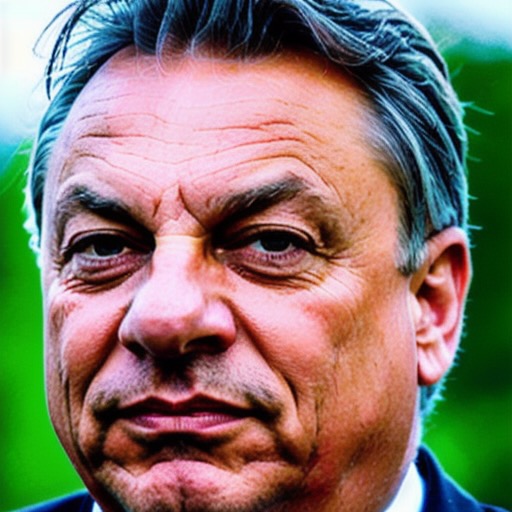
Orbán has pursued an economic model, termed “illiberal democracy,” which combines populist rhetoric, protectionist measures, and state intervention in the economy. His policies have focused on reducing foreign influence, promoting self-sufficiency, and safeguarding Hungary’s cultural identity. These approaches have attracted both supporters who appreciate his emphasis on national interests and critics who argue that they undermine democratic institutions and pluralism.
Internationally, Orbán has been vocal in opposing immigration and has taken a tough stance on border security, becoming a prominent figure in the European migration crisis. He has consistently challenged EU policies and institutions, advocating for greater national sovereignty and asserting Hungary’s interests within the European Union.
Overall, Viktor Orbán is a controversial figure, with supporters viewing him as a defender of national interests, while critics argue that his policies have undermined the country’s democratic foundations and values of liberal democracy.
Trump’s approach to immigration, including the controversial travel ban and emphasis on border control, has drawn comparisons to the policies of authoritarian leaders like Viktor Orban of Hungary and Rodrigo Duterte of the Philippines (The New York Times, 2017).
Donald Trump has shown admiration for Viktor Orban, the Prime Minister of Hungary, in several ways. Here are a few examples:
1. Public Praise: Trump has publicly praised Orban on multiple occasions, commending his leadership and policies. In 2019, during a meeting in the Oval Office, Trump referred to Orban as a “tough man” and praised him for doing a “tremendous job” in Hungary.
2. Similar Political Rhetoric: Trump and Orban share similar political rhetoric and have both been known for their nationalist and anti-immigration stances. Trump has often expressed support for Orban’s tough stance on immigration and border control, echoing his own policies and beliefs.
3. Policy Alignment: Trump and Orban have aligned on several policy issues, particularly in the areas of immigration and national sovereignty. Both leaders have advocated for stronger border security and stricter immigration policies, emphasizing the need to protect their respective countries’ interests.
4. Limited Criticism: Trump has been relatively restrained in criticizing Orban’s controversial actions and policies, such as the erosion of democratic institutions and the crackdown on civil liberties in Hungary. This restraint can be seen as a sign of admiration or at least a reluctance to publicly criticize Orban.
It is important to note that while Trump has shown admiration for Orban, his support for the Hungarian leader has faced criticism and scrutiny both domestically and internationally. Orban’s government has been accused of undermining democratic norms and institutions, restricting media freedom, and suppressing political opposition. Trump’s praise for Orban has been seen by some as an endorsement of these actions, raising concerns about the erosion of democratic values. At the same time, these criticisms have also pointed out that Trump has an affinity toward Orban’s tight fisted handling of Hungarian civil issues.
Putin of Russia and Kim Jong-un of North Korea have been seen as evidence of his preference for direct engagement and personal diplomacy (Politico, 2018). Trump has shown a willingness to engage with leaders who may be considered controversial, believing that direct communication and negotiation can lead to positive political and personal outcomes.
Trump’s Admiration for Kim Jong Un

Kim Jong Un is the leader of North Korea, holding the positions of Chairman of the Workers’ Party of Korea, Chairman of the State Affairs Commission, and Supreme Commander of the Korean People’s Army. He assumed power in 2011, following the death of his father, Kim Jong Il.
Kim Jong Un’s leadership is characterized by a continuation of the authoritarian and repressive regime established by his predecessors. His policies prioritize the pursuit of nuclear weapons and maintaining a strict control over society, with limited civil liberties and a centrally planned economy.
Under his rule, North Korea has faced widespread international condemnation due to its nuclear weapons and ballistic missile programs, resulting in multiple rounds of international sanctions. Kim has prioritized national defense and portrayed the nuclear arsenal as a deterrent against perceived external threats, primarily from the United States and its allies.
Kim Jong Un has also attempted diplomatic engagement, pursuing summits and meetings with world leaders, including several historic meetings with former U.S. President Donald Trump and South Korean President Moon Jae-in. However, despite these diplomatic efforts, North Korea’s nuclear program remains a major unresolved issue, resulting in ongoing tensions and diplomatic challenges.
Within North Korea, Kim maintains a cult of personality that portrays him as a strong and revered leader. The regime tightly controls information flow, limits access to the internet, and enforces strict censorship, effectively isolating the country from the outside world.
After Kim Jong Un assumed power as the Supreme Leader of North Korea, there was a highly publicized and dramatic purge within the country’s political elite. One of the most prominent figures affected by this purge was Kim’s uncle, Jang Song Thaek.
Jang Song Thaek was married to Kim Jong Un’s aunt and had held influential positions in the North Korean government. However, in December 2013, Jang was accused of various crimes, including corruption, factionalism, and acts damaging to the state. Following a high-profile trial, he was swiftly executed.
The execution of Jang Song Thaek was portrayed by the North Korean media as a necessary measure to root out “counter-revolutionary” elements within the regime. It was seen as a ruthless consolidation of power by Kim Jong Un, aimed at eliminating perceived threats to his authority and tightening his grip on the country’s leadership.
This purge sent shockwaves both domestically and internationally, as it was a vivid demonstration of the brutal nature of the regime and Kim Jong Un’s willingness to eradicate potential rivals or dissenters. The execution of Jang Song Thaek further solidified Kim’s position as the uncontested leader of North Korea and reinforced his commitment to maintaining absolute control over the country.
Critics point to severe human rights abuses, including political repression, forced labor camps, indoctrination, and the suppression of freedom of speech and expression. Nonetheless, Kim Jong Un’s leadership style and policies continue to shape North Korea’s domestic and international affairs, making him a significant and controversial figure on the global stage.
Donald Trump has shown admiration for Kim Jong Un, the Supreme Leader of North Korea, in a few notable ways. It is important to note that Trump’s relationship with Kim Jong Un has been a subject of scrutiny and controversy. Here are a few examples of how Trump has expressed admiration for Kim:
1. Personal Praise: Trump publicly praised Kim Jong Un on several occasions, often highlighting his leadership skills and referring to him as “very smart” and a “talented guy.” Trump has also described their personal relationship as “very good” and has expressed respect for Kim.
2. Diplomatic Engagement: Trump pursued an unprecedented approach of direct diplomacy with North Korea, engaging in historic summits with Kim Jong Un. These meetings, such as the Singapore Summit in 2018 and the Hanoi Summit in 2019, were seen as a display of admiration for Kim’s position as the leader of North Korea.
3. Positive Statements: Trump has made positive statements about Kim Jong Un’s intentions and commitment to denuclearization. Despite the lack of concrete progress in denuclearization talks, Trump continued to express optimism and trust in Kim’s willingness to negotiate.
4. Downplaying Human Rights Concerns: Trump has been criticized for downplaying human rights concerns in North Korea. In his interactions with Kim, he has focused primarily on denuclearization and security issues, while giving less emphasis to human rights abuses and the plight of North Korean citizens.
It is important to note that Trump’s approach to North Korea and his admiration for Kim Jong Un have faced criticism and skepticism. Critics argue that Trump’s engagement with Kim has not produced substantial progress in denuclearization and has legitimized a repressive regime without proper accountability for human rights abuses.
Trump Downplays NATO
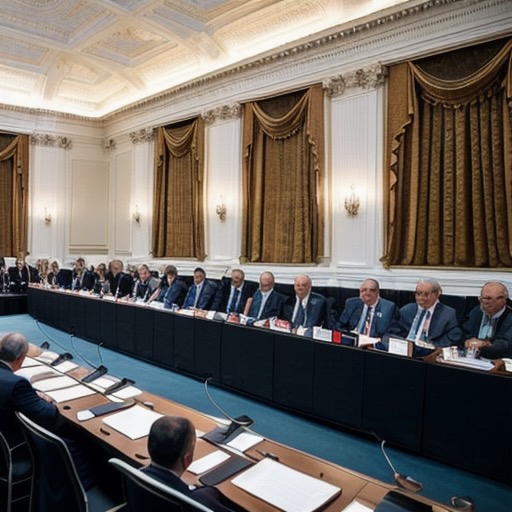
Trump’s approach to NATO and his rhetoric created an atmosphere of uncertainty and strained relations with many of our allies. Critics argue that this approach weakened the alliance and undermined the collective security framework that NATO provides. The Biden administration has emphasized the importance of NATO and has sought to strengthen alliances, signaling a shift in approach from the previous administration.
Donald Trump’s approach to American relations with allies, particularly NATO (North Atlantic Treaty Organization), has been a subject of debate and criticism. While it is important to note that Trump did not explicitly seek to undermine American relations with NATO, his actions and rhetoric have raised concerns among allies. Here are a few examples of Trump’s attempts that were seen as undermining American relations with NATO:
1. Criticism of NATO Members: Trump has been vocal about his frustration with NATO member countries not meeting their defense spending commitments. He criticized allies for not contributing their fair share to the alliance, often referring to it as “unfair” and “obsolete.” This criticism strained relations with some NATO members and created an atmosphere of uncertainty.
2. Threats to Withdraw from NATO: During his presidency, Trump made statements suggesting a potential withdrawal from NATO, or at least questioning the United States’ commitment to the alliance. This raised concerns among allies about the strength of American support and the future of NATO.
3. Unilateral Decision-Making: Trump’s administration took various unilateral actions that affected NATO and its allies without prior consultation or coordination. For example, the decision to withdraw troops from Syria without consulting NATO allies caused concern among some allies and raised questions about the reliability of American commitments. Another unilateral action was the withdrawal of the United States from the Paris Climate Agreement. This decision was met with disappointment from NATO allies who viewed the agreement as a crucial global effort to combat climate change. It raised concerns about the United States’ commitment to addressing environmental challenges and its willingness to cooperate with international partners. The Trump administration’s withdrawal from the Iran Nuclear Deal, also known as the Joint Comprehensive Plan of Action (JCPOA), was another unilateral action that raised concerns among NATO allies. The deal, which aimed to curb Iran’s nuclear program, was seen by many allies as a significant diplomatic achievement. The withdrawal created uncertainty and strained relations with both European allies and Iran.
These unilateral actions were seen by some NATO allies as a departure from the principles of multilateralism and consultation that underpin the alliance. They raised concerns about the United States’ willingness to coordinate and collaborate with allies on important international issues. It is worth noting that while these actions caused concerns, not all NATO allies viewed them in the same way, and there were varying degrees of disagreement and criticism among member countries.
4. Tariffs and Trade Disputes: Trump’s administration imposed tariffs on steel and aluminum imports from some NATO member countries. The imposition of tariffs on steel and aluminum imports from some NATO member countries, including Canada and the European Union, was another unilateral action that caused tensions. These trade disputes raised concerns about the potential for a trade war and disrupted economic relations between the United States and its allies.
It is important to note that not all of Trump’s actions were aimed at undermining American relations with NATO. His administration also pushed for increased defense spending by NATO allies, which was a long-standing concern for the United States. The results of Trumps attempts to get NATO to increase their economic participation in the defense of Europe was noted and appreciated by US authorities. Trump’s criticisms of NATO were not entirely without merit, as the issue of burden-sharing within the alliance has been a topic of discussion for years. It should also be noted that Trump’s many unilateral actions have not benefited America, but rather may have caused greater long-term damage to America’s leadership world-wide.
Doubt About America’s Commitment to Allies
The American unilateral withdrawal from Syria refers to the decision made by the United States to remove its troops from Syria without consulting or coordinating with its allies or partners in the region. The decision was announced in December 2018 by former President Donald Trump. It came as a surprise to many, including the U.S. military and its allies.
The withdrawal was a significant shift in U.S. policy towards Syria. Prior to the announcement, the United States had maintained a military presence in Syria to support local forces in the fight against ISIS. The U.S. troops were also seen as a deterrent to other actors in the region, including Russia, Iran, and Turkey.
The decision to withdraw was motivated by the Trump’s notion that the United States had largely achieved its objective of defeating ISIS in Syria and that it was time for other countries, particularly those in the region, to take on the responsibility of ensuring stability. Additionally, the Trump administration wanted to fulfill its campaign promise of reducing U.S. military involvement in foreign conflicts.
However, the decision was met with widespread criticism and concern. Many argued that a sudden withdrawal without a comprehensive plan or coordination with allies could have negative consequences, including the resurgence of ISIS, destabilization of the region, and abandonment of Kurdish allies. The decision also raised questions about the United States’ commitment to its global responsibilities and the reliability of its alliances.
The withdrawal of troops from Syria without consulting NATO allies had several impacts on regional stability and the fight against terrorism:
1. Increased Instability: The sudden withdrawal of U.S. troops from Syria created a power vacuum in the region, allowing various actors, Russia. Turkey, and Iran for instance, to fill the void and potentially destabilize the area further. This vacuum gave an opportunity for terrorist organizations like ISIS to reemerge and regain strength, as they were no longer facing significant opposition from U.S.-backed forces. This instability had the potential to spread to neighboring countries and undermine regional security.
2. Weakened Counterterrorism Efforts: The withdrawal of U.S. troops, who were working alongside Kurdish forces to combat ISIS, weakened the overall counterterrorism efforts in the region. The Kurdish-led Syrian Democratic Forces (SDF) played a crucial role in the fight against ISIS, and their partnership with U.S. forces was vital in reclaiming territory from the terrorist group. The abrupt withdrawal left the Kurdish forces vulnerable and strained their ability to effectively combat ISIS, which could allow the terrorist organization to regroup and pose a renewed threat.
3. Negative Impact on Allies’ Trust: The decision to withdraw troops without consulting NATO allies had a negative impact on trust and cooperation within the alliance. Allies felt blindsided and undermined, as the move was seen as disregarding their interests and disregarding the principle of consultation. This lack of coordination raised concerns about the United States’ commitment to collective security and its reliability as an ally.
4. Shifting Regional Dynamics: The withdrawal of U.S. troops also had implications for the regional dynamics in the Middle East. It created an opportunity for other actors, such as Russia, Iran, and Turkey, to expand their influence in the region. This shift in power dynamics could lead to further complications and conflicts, potentially exacerbating existing tensions.
Overall, the withdrawal of troops from Syria without consulting NATO allies had a significant impact on regional stability and the fight against terrorism. It created a power vacuum, weakened counterterrorism efforts, strained alliances, and shifted regional dynamics, all of which had the potential to undermine the progress made in combating terrorism and ensuring regional stability. These concerns raised doubts among many of our allies regarding America’s commitments to NATO.
The sudden withdrawal of U.S. troops from Syria had several potential consequences:
The American unilateral withdrawal from Syria and its implications on regional stability and the fight against terrorism raised serious doubts about America’s commitment to NATO. The decision to withdraw US troops without consulting or coordinating with allies raised doubts about America’s commitment to Europe. The withdrawal created a power vacuum, increased instability, weakened counterterrorism efforts, strained alliances, and shifted regional dynamics. The potential consequences included the resurgence of ISIS, destabilization of the region, threats to Kurdish allies, increased influence of Russia and Iran, damage to US credibility and alliances, and potential humanitarian consequences. The following are brief explanations of some of the consequences of Trump’s unilateral actions:
1. Resurgence of ISIS: One of the primary concerns was the potential resurgence of ISIS. The withdrawal created a security vacuum, allowing ISIS to regroup, recruit new members, and regain strength. Without a significant presence of U.S.-backed forces, ISIS did and will continue to exploit the situation and expand its territorial control, leading to a renewed threat to regional stability and global security.
2. Destabilization of the Region: The sudden withdrawal also had the potential to destabilize the region further. It disrupted the delicate balance of power and left various actors, including Kurdish forces, exposed to potential attacks from adversaries. This instability will lead to further violence, conflicts, and humanitarian crises, impacting neighboring countries and potentially spilling over into other regions.
3. Threat to Kurdish Allies: The withdrawal put the Kurdish forces, who were instrumental in the fight against ISIS, at risk. They had been relying on U.S. support and partnership, and the sudden withdrawal left them vulnerable to attacks from other actors, including Turkey. This situation not only endangered the Kurdish forces but also strained relationships between the United States and its Kurdish allies.
4. Increased Influence of Russia and Iran: The withdrawal created an opportunity for Russia and Iran to expand their influence in the region. With the absence of U.S. forces, these actors and China, are filling the power vacuum and strengthen their presence, potentially altering the regional dynamics and undermining U.S. interests in the Middle East.
5. Damage to U.S. Credibility and Alliances: The sudden withdrawal without proper consultation with NATO allies damaged U.S. credibility and strained relationships with key partners. Allies felt blindsided and questioned the United States’ commitment to collective security. This could have long-term consequences for U.S. alliances and cooperation in future military endeavors.
6. Humanitarian Consequences: The sudden withdrawal also had potential humanitarian consequences. It disrupted the stability and security necessary for the delivery of humanitarian aid and assistance to the affected population. This situation could exacerbate the suffering of civilians and lead to a further displacement of people, creating a humanitarian crisis.
These potential consequences highlighted the importance of carefully planned and coordinated military decisions to ensure regional stability, counterterrorism efforts, and the protection of allies and vulnerable population.
Summary
In conclusion, while there is debate about the extent to which he can be considered an authoritarian, it is undeniable that Trump’s political style veers more toward strongman tactics than traditional democratic norms. His admiration for autocratic leaders, attacks on democratic institutions, and divisive rhetoric provide a compelling case for his tendencies toward authoritarianism. While his operating within the American democratic system may challenge the assumption of an outright dictatorship, these elements of Trump’s leadership style and demeanor can provide valuable insight into his affinities toward authoritarianism.
Donald Trump’s public admiration for five of the world’s foremost authoritarian leaders and his actions and words, when referring to our NATO allies, provide a clear glimpse into his mind and thoughts regarding American democracy. His dismissive attitude toward NATO and its leaders provides ample indication of his long-term machinations toward Europe and the rest of the world’s democracies.
There are two points that the author wishes to make with this article: one is that America has been weakened by Trump’s first term in office and that weakened condition will take years to restore. It is pure ignorance and stupidity to think that America, acting by itself and for its own security, can dis all its traditional allies, create new alliances with fascist autocrats, and maintain our economy and individual freedoms. The other point is that, if elected, Trump will do everything possible to create an authoritarian dictatorship in which only the wealthy will have freedoms that our Constitution guarantees. The rest of us will be relegated to worker-bee status and to poverty. Donald Trumps has two goals: To be the American strongman, dictator, and fuhrer. His other goals is to use the American economic system and drain its wealth into his own greedy pockets, to be the world’s richest man.
 CubieSphere