

Why Evangelicals Support an unRighteous Trump
Recent polls indicate that evangelicals make up 38% of Republican voters, and their support has played a significant role in recent national elections. In the 2016 presidential election, evangelicals were instrumental in pushing Donald Trump to victory. While he ultimately lost the 2020 election, evangelicals remained a major voting bloc that almost secured for him a second term. This paradoxical support for Trump is noteworthy considering his controversial history, including allegations of defrauding clients, university students, and the IRS, as well as his exclusionary practices and legal issues with New York City and the state. These actions and beliefs seemingly contradict the values of the evangelical movement. Hence, the paradox lies in their continued support for Trump despite these apparent contradictions.

Evangelicals make up a significant portion of the Republican Party’s base, and their strong support for Trump has the potential to shape the political landscape in the 2024 election. Their voting patterns, activism, and influence within their communities can impact the outcome of primary elections and ultimately influence the Republican candidate who will run in the general election.
A few Reasons Why Evangelical Support Trump
One of the main reasons evangelicals support Trump is his conservative policy agenda. His public stance on issues such as abortion, religious freedom, and traditional marriage aligns with the values and beliefs held by many evangelicals. As Tony Compolo wrote recently, “The two hot issues are the gay issue and the abortion issue. These are the two defining issues in the evangelical community these days. I’m sure that these hot buttons will be pushed, time and time again.” Trump positioned himself as a champion of these causes, promising to advance other conservative policies such as defense of religious freedom, and appointing conservative judges. Evangelicals who have expressed concerns about perceived encroachments on religious liberty, such as healthcare mandates or LGBTQ+ rights, view Trump as a champion who will safeguard their ability to live out their faith according to their beliefs. This policy alignment outweighed evangelical concerns about his personal conduct or actions that contradicted their values.
Evangelicals place a strong emphasis on the conceived and unborn and strongly oppose abortion. Trump consistently and publicly expressed his pro-life stance, appointing conservative judges who could potentially overturn Roe v. Wade and implementing policies that restricted access to abortion. This alignment on the issue of abortion was a significant factor in garnering evangelical support.
Evangelicals value the free exercise of some religions and the protection of religious liberties. Trump positioned himself as a defender of religious freedom for some, advocating for policies that aimed to protect the rights of individuals and organizations to practice their faith without interference. His executive actions, such as the Religious Freedom Restoration Act and the repeal of the Johnson Amendment, were seen as favorable to evangelicals.
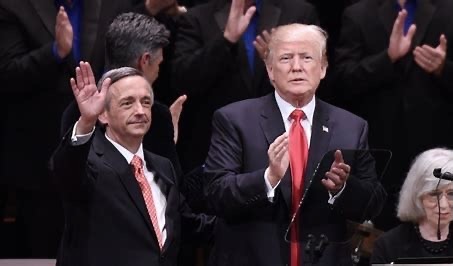
Republican presidential nominee Donald Trump promised a group of pastors in 2016 that he would unmuzzle and empower the “silenced” church and increase church attendance by repealing the Johnson Amendment if he is elected president . The Johnson Amendment, which is a piece of legislation prepared by former President Lyndon Johnson and passed by Congress in 1954, is often described as prohibiting charitable organizations (including churches) from endorsing political candidates.
Evangelicals place significant importance on the judiciary, particularly the Supreme Court. Trump’s appointments of conservative justices, such as Neil Gorsuch, Brett Kavanaugh, and Amy Coney Barrett, were seen as a major victory for evangelicals seeking to re]
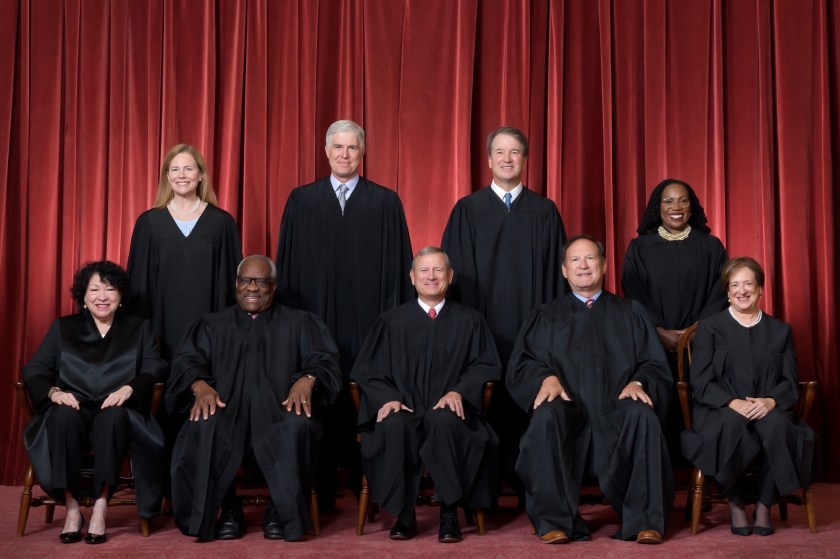
]’[|||shape the legal landscape in line with their values. They believe that these appointments will have a lasting impact on issues they care about, such as abortion rights and religious freedom. As Katherine Stewart, an American journalist and author, who wrote an article in “The Guardian” about the influence of the Christian right on the judiciary: “Leaders of the movement understood very well that if you can capture the courts, you can change society”
Some evangelicals support Trump due to his economic policies and perceived commitment to conservative principles in areas such as limited government, lower taxes, and deregulation. These are traditional and valid reasons to support a conservative presidential agenda. They articulate the conservative ideologies that Conservatives have advocated for generations. These arguments are reasonable and credible and generally may explain why some evangelicals prioritize these issues over concerns about his personal conduct or actions that contradict their beliefs. However, in these issue I must refer to the words of John Henry Newman in his work Apologia Pro Vita Sua, “You can’t get good water from a poisoned well.” This statement was written in 1864 in his resignation letter when he quit his position as the Anglican vicar of St. Mary’s, Oxford.
Evangelicals, like any other group, have their own set of beliefs, values, and worldview. They often prioritize issues such as religious freedom, traditional family values, and opposition to abortion and same-sex marriage. When evangelical voters consume media sources that cater to these beliefs, they are more likely to encounter information, narratives, and opinions that confirm their existing views.
The Echo Chamber
Misinformation, such as the “big lie”, that advocates the erroneous information that the 2020 election was stolen, and media narratives often create an echo chamber effect, where individuals are exposed to information that aligns with their existing beliefs and values. Trump’s labeling of media outlets as “fake news” has contributed to the erosion of trust in mainstream media, making it difficult for evangelicals to accept evidence that contradicts their beliefs. This can be particularly influential in shaping the beliefs of evangelicals who consume only media sources that reinforce their conservative worldview. When they encounter information that contradicts their beliefs, they will be more inclined to dismiss it as “fake news” without critically evaluating the evidence.

There have been many instances where evangelical pastors or leaders have believed misinformation and conspiracy theories. The list is long and the consequences of promoting these examples of misinformation is mounting. Here are a few examples of such instances:
1. QAnon Conspiracy Theory: Some evangelical leaders have expressed support or belief in the QAnon conspiracy theory, which claims that a secret cabal of Satan-worshipping pedophiles controls the world. While it is not limited to evangelical leaders, a few prominent figures within the evangelical community have been associated with this conspiracy theory. According to the Public Religion Research Institute, QAnon has a sizable number of evangelicals as followers. The study found that 20% of QAnon devotees are white evangelicals.
2. COVID-19 Misinformation: During the COVID-19 pandemic, there were instances where evangelical pastors or leaders promoted misinformation related to the virus. This included claims that the virus was a hoax, downplaying the severity of the pandemic, or promoting unproven treatments. A recent survey conducted by the National Association of Evangelicals revealed that although 95% of evangelical leaders said they would get vaccinated against COVID-19, their congregants overwhelmingly rejected inoculation.
3. Election Fraud Claims: Following the 2020 U.S. presidential election, some evangelical leaders propagated baseless claims of widespread voter fraud, despite numerous courts and officials stating that there was no evidence to support these claims. And none of these claims ever demonstrated any evidence. Even in the face of overwhelming evidence of no evidence, some leaders like Franklin Graham, the son of the late evangelist Billy Graham, who has been tweeting about the election fraud claims: “I believe that there was fraud in this election. The president has every right to look into it. I’m sure he will.”
It’s important to approach these instances with nuance and recognize that they do not represent the entire evangelical community. Many evangelical pastors and leaders actively promote accurate information and reject conspiracy theories. It’s crucial that every person interested in American politics evaluates information critically and rely on reputable sources when forming beliefs and opinions.
Misinformation and media narratives can contribute to the spread of conspiracy theories, which can be particularly appealing to individuals who feel marginalized or distrustful of mainstream institutions. Evangelical voters, like any other group, are not immune to the allure of conspiracy theories. Trump’s rhetoric and promotion of conspiracy theories, such as the claim that the 2020 election was stolen, have resonated with some evangelicals who may be more inclined to believe and share such narratives.
This reinforcement of beliefs can create an echo chamber effect, as evangelicals may predominantly hear viewpoints that align with their conservative values or misinformation. Within this echo chamber, alternative perspectives or evidence that contradict their beliefs may be dismissed or labeled as biased or “fake news.” This can make it challenging for evangelicals to consider or accept information that challenges their existing beliefs, as they are more likely to seek out and trust sources that confirm their worldview.
The echo chamber effect reinforces confirmation bias, which is the tendency to seek out and interpret information that confirms preexisting beliefs and values. When individuals are surrounded by like-minded individuals and consume information that aligns with their views, it can further strengthen their existing beliefs and make them less open to alternative perspectives.
The echo chamber effect can further solidify the beliefs of evangelicals and reinforce their identity as a cohesive group. It can create a sense of shared values and a collective narrative, strengthening social bonds within the evangelical community. However, it can also limit exposure to diverse perspectives, hinder critical thinking, and contribute to the erosion of trust in sources that provide different viewpoints.
The echo chamber effect contributes to political and ideological polarization. When individuals are predominantly exposed to one side of an issue, such as the “big lie”, it can deepen divisions and make it difficult to find common ground or engage in constructive dialogue with those who hold different beliefs. This can lead to increased societal polarization and hinder collaborative problem-solving.
In an echo chamber, individuals may have limited exposure to alternative viewpoints, which can result in a narrow understanding of complex issues. This can lead to oversimplification, stereotyping, and a lack of empathy towards those with differing opinions. It is important to actively seek out diverse perspectives in order to foster a more comprehensive understanding of the world.
The echo chamber effect can perpetuate the spread of biased or inaccurate information such as the false narrative that the 2020 election was stolen from Trump within a specific group. When individuals are only exposed to sources that confirm their beliefs, they may be more susceptible to misinformation, as they are less likely to critically evaluate the information presented to them. This can contribute to the spread of misinformation and the erosion of trust in reputable sources.
Evangelicals, like any other group, have the tendency to seek out information that confirms their preexisting beliefs and avoid information that challenges them. This selective exposure can lead to a reinforcement of their existing beliefs and make it difficult for them to accept evidence that contradicts their views. Trump’s labeling of media outlets as “fake news” has further reinforced this selective exposure by discouraging evangelicals from engaging with sources that provide a different perspective.
The Impact of Faith and Community
Evangelical circles often foster a strong sense of community and identity. Churches and religious organizations play a central role in the lives of many evangelicals, providing a support network and a sense of belonging. This community can create a strong sense of loyalty and solidarity, which can outweigh contradictory evidence or actions by an individual like Trump.
Evangelical communities provide a supportive environment where individuals can reinforce their shared values. Trump’s public rhetoric and policy positions often aligned with these publicly stated values, such as opposition to abortion, support for religious freedom, and conservative social ideals. When these values are reinforced within the community, it strengthens the support for Trump.
Evangelicals often perceive their religious liberties to be under threat, especially in a rapidly changing cultural and political landscape. Trump’s administration actively sought input from evangelical leaders and implemented policies that were seen as protective of their religious freedoms. Evangelicals such as attorney Jay Sekulow claim that
“All across America, religious institutions and individuals are being subjected to increasing restrictions on their free exercise of religion and freedom of speech—a crackdown that can be seen in a variety of different contexts ranging from employers or health care professionals being required to provide or facilitate abortions against the dictates of their faith to street evangelists and public school students seeking to share their religious viewpoints with others. This rising disregard for religious liberty represents a marked break from the long-standing American tradition of accommodating religious practice and expression that predates the ratification of the Constitution.”
This sense of protection further solidified their support for Trump, as they believed he would defend their interests.
There have been recent laws passed in the United States that protect the rights of the LGBTQ+ community but conflict with evangelical beliefs. One such law is the “Equality Act”, which was passed by the US House of Representatives in February 2021. The act prohibits discrimination based on sexual orientation and gender identity in areas such as employment, housing, credit, and public services. However, the act has faced opposition from conservatives who argue that it infringes on religious freedom.
Another recent law that protects the rights of the LGBTQ+ community is the Marriage and Religious Freedom Act. This act repeals the Defense of Marriage Act and ensures that same-sex marriages cannot be denied by any person “acting under color of State law”. However, the act also protects churches and religious organizations from being forced to perform gay weddings or provide services for celebrations that go against their faith’s teachings.
It’s important to note that these laws are often the subject of legal and political debate, and the interpretation of the First Amendment’s “free exercise” clause has shifted over time.
These are just a few examples of how religious liberties can be limited in the United States. It’s important to note that the limits on religious liberties are often the subject of legal and political debate, and the interpretation of the First Amendment’s “free exercise” clause has shifted over time ¹.
The unwavering support of evangelicals for Trump can largely be attributed to the influence of faith and community, which create a strong sense of loyalty and identity that can outweigh contradictory evidence or actions. Religious beliefs play a central role in shaping the worldview of evangelicals, emphasizing values such as family, morality, and conservative social ideals. Donald Trump made promises to evangelicals regarding religious freedom. In a closed-door meeting with evangelical leaders in New York City, he promised to fiercely defend religious freedom if he won the White House in 2016 election. Trump’s rhetoric and policy positions often aligned with these values, making him an appealing candidate for many evangelicals.
Within the evangelical community, there can be social pressure to conform to a particular set of beliefs and political views. Individuals who deviate from the dominant beliefs may face criticism or ostracism. This social pressure can create a strong incentive to align with the majority opinion, including supporting Trump.
Within evangelical circles, there is a strong sense of community and belonging. Churches and religious organizations provide a supportive environment where individuals can connect with like-minded believers and reinforce their shared values. This sense of community fosters a collective identity that transcends individual opinions or shortcomings. When faced with conflicting information about Trump’s actions or beliefs, evangelicals may prioritize their sense of community and the preservation of their faith over critical evaluation.
Moreover, evangelicals have often felt marginalized or misunderstood by mainstream society due to their conservative beliefs. Trump’s willingness to champion their causes and address issues important to them, such as religious freedom and pro-life policies, resonated deeply within the evangelical community. This created a sense of validation and empowerment, further strengthening their support for him.

Additionally, evangelicals have a long-standing tradition of engaging in political activism, viewing it as a way to promote their values and protect their religious liberties. Trump’s administration actively courted evangelical leaders and sought their input on policy matters, which further solidified their alliance. This sense of influence and access to power can reinforce loyalty, even when faced with evidence that may challenge their support.
The unwavering support of evangelicals for Trump can be attributed to the influence of faith and community. Religious beliefs and the sense of belonging within evangelical circles create a strong sense of loyalty and identity that can outweigh contradictory evidence or actions. The alignment of Trump’s rhetoric and policies with their values, combined with a desire for validation and political influence, has contributed to the steadfast support of evangelicals despite potential contradictions.
Evangelicals Leaders
Evangelical leaders, such as pastors and influential figures within religious organizations, play a significant role in shaping the views of their community members. When these leaders express support for Trump, it can influence the opinions and attitudes of their followers. The trusted guidance of these leaders can contribute to the collective support for Trump within the evangelical community. It is unfortunate that many evangelical leaders have little training in assessing social issues but deep training in linking doctrinal beliefs to certain cherry picked Biblical verses that make a broader and deeper social analysis unacceptable.
While some may argue that politics and religion should remain separate, it is undeniable that the influence of evangelical leaders extends beyond the spiritual realm. A study conducted by Pew Research Center found that 69% of white evangelical Protestants believe that religious leaders should express their views on social and political issues. This support for engagement in the public sphere suggests that when evangelical leaders express their political support for Trump, their congregations are more likely to align their views accordingly.
Evangelical leaders, such as pastors, hold a position of moral authority within their communities. Their teachings and sermons often shape the values and beliefs of their congregations. When these leaders express their political support for Trump, it can be seen as an endorsement of his character and policies, leading community members to align their views accordingly.
Evangelical leaders are responsible for interpreting and applying biblical teachings to contemporary issues. Their interpretation of scripture can heavily influence the political views of their community members. Some evangelical leaders have emphasized certain biblical principles, such as pro-life stances or the defense of religious liberty, which align with Trump’s public policies. This interpretation can sway the opinions of their followers and generate support for Trump.
Evangelical leaders, such as the pastor of First Baptist Church of Dallas, Robert Jefferes, often make public endorsements and recommendations during political campaigns. These endorsements carry weight and can influence the voting decisions of their community members. When respected leaders endorse Trump, it can reinforce the perception that he aligns with their religious values, thereby increasing support for him within the community.
Evangelical leaders have direct access to their community members through various communication channels, such as sermons, newsletters, websites, and social media platforms. They can use these channels to promote specific narratives, highlight Trump’s policies favorable to evangelicals, or frame political issues in a way that resonates with their audience. By shaping the information and discourse within the community, they can influence support for Trump.
Evangelical leaders often play an instrumental role in mobilizing their community members for political action. They may organize voter registration drives, encourage participation in rallies or protests, and facilitate engagement with political campaigns. Their ability to organize and activate their followers can significantly impact the level of support for Trump within the evangelical community.
When an evangelical leader or pastor endorses a political candidate, they send a powerful message to their congregation regarding the values and policies they prioritize. This endorsement carries significant weight and has the ability to shape the beliefs and perspectives of those who regard them as moral authorities. It is worth noting that these actions can be perceived as validating Trump’s behavior, despite his controversial actions and allegations of being embroiled in various scandals, such as lying, rape, participating in an insurrection against the United States, and leading America to the brink of autocracy. And still some evangelical leaders continue to promote him for the leader of our country. This validation erodes the trust their followers may have in their spiritual guidance. This behavior, driven by a focus on winning at all costs rather than upholding integrity, sends a distressing message to the children of their followers, suggesting that personal gain outweighs moral principles.
Evangelical Leaders and Pastors
Evangelical leaders and pastors hold a significant responsibility to their congregations, which includes sharing only truthful information and avoiding the propagation of conspiracy theories and misrepresentations. Leaders and pastors have a profound responsibility to their congregations. They are entrusted with the task of shepherding and guiding their flock spiritually, morally, and intellectually. This responsibility includes the duty to share only truthful information and to avoid spreading conspiracy theories and misrepresentations. The future of their congregations depends on receiving accurate news, especially in regards to political figures like Donald Trump.
The Future of Evangelicals
The future of evangelical congregations is dependent on several factors, one of which is receiving accurate news and information. In an age marked by the rapid spread of misinformation and the proliferation of conspiracy theories, it is crucial for evangelical leaders to be discerning in their sources of information and to verify the accuracy of what they share with their congregations. By doing so, they can foster an environment of trust and integrity within their communities.
To ensure the dissemination of accurate and reliable news, evangelical leaders and congregants can take certain steps. First, they should prioritize critical thinking and be aware of their own biases when evaluating information. They should seek out diverse perspectives and rely on reputable sources that adhere to journalistic ethics and standards. Fact-checking organizations can also be consulted to verify the accuracy of news stories. Additionally, fostering open and respectful dialogue within the congregation can encourage the sharing of different viewpoints and promote a culture of truth-seeking.
Ultimately, the responsibility for disseminating accurate and reliable news lies not only with evangelical leaders but also with individual congregants. By actively engaging in critical thinking, seeking diverse perspectives, and relying on reputable sources, both leaders and congregants can contribute to a community that is well-informed and capable of discerning truth from falsehood. This is only possible if pastors and teachers take time to rightly divide the word of truth (2 Tim. 2:15) and study the Scriptures with a deep and progressive conviction that truth will win over violence and deception. A few cherry picked verses will lead no where, but the study of Christian History will prevent evangelicals from repeating the mistakes of the past.
While it is important to acknowledge that there have been instances where some evangelical leaders have believed misinformation, it is crucial to remember that these instances do not represent the entire evangelical community. Many evangelical pastors and leaders actively strive to promote truth and reject baseless claims. It is essential for both leaders and congregants to approach information critically, relying on reputable sources to ensure the dissemination of accurate and reliable news.
Summary
If Donald Trump wins the 2024 presidential election, it could have a significant impact on the social and political landscape of America. According to a poll conducted by The Associated Press-NORC Center for Public Affairs Research, 62% of adults believe that democracy in the United States could be at risk depending on who wins the election. The poll also found that 72% of Democrats and 55% of Republicans share this concern.
In a politically polarized nation, both Republican and Democratic voters worry over the state of U.S. democracy and how the outcome of the presidential contest will affect its future; they just disagree over who poses the threat. President Joe Biden has attempted to paint a dystopian future if GOP front-runner and former President Donald Trump returns to the White House after promising to seek retribution against opponents and declining to rule out that he would abuse the powers of the office. The former president has tried to flip the narrative lately, saying the election subversion and documents cases against him show Biden has weaponized the federal government to prosecute a political opponent. He has called Biden the “destroyer of American democracy”.
It is difficult to predict exactly how a Trump presidency would change the social and political landscape of America. However, some experts believe that a second Trump term could lead to widespread spying, bullying, and retaliation of U.S. citizens based on their perceived loyalty or disloyalty to the Oval Office occupant. Even worse would be the loss of democracy should Trump win and the loss of a constitutional government leaving him as a fascist dictator. Two hundred and fifty years of a democratic experiment will end in failure. This end would provide an answer to the proposition that democracy is great if we could have kept it.
In terms of evangelicals, a recent NBC News poll found that Trump has a strong support base among white evangelicals, with 54% of them favoring him in the GOP primary poll. However, some experts believe that Trump’s support among evangelicals may not be as strong as it was in the past. A recent focus group conducted by GOP pollster Frank Luntz found that while many evangelicals are fond of Trump, they are not completely wedded to him.
Evangelical pastors have a crucial responsibility to ensure that they pass forward accurate and reliable information to their congregation, rather than relying on or promoting conspiracy theories. Here are a few key responsibilities they should prioritize:
- Commitment to Truth: Pastors should prioritize a commitment to truth in their teaching and communication. They should diligently research and verify information before sharing it with their congregation. This includes being cautious of spreading unfounded rumors or conspiracy theories that lack credible evidence.
- Critical Thinking: Pastors should encourage critical thinking within their congregation, promoting a discerning approach to information. They can emphasize the importance of evaluating sources, fact-checking claims, and seeking multiple perspectives. This helps to foster a healthy skepticism towards unsupported theories.
- Teach Media Literacy: Pastors can educate their congregation about media literacy, helping them develop the skills to evaluate and navigate the vast amount of information available. This includes teaching them to identify reliable sources, recognize biases, and differentiate between reputable journalism and misinformation.
- Promote Discourse and Open Dialogue: Creating an environment of open dialogue allows for respectful discussions within the congregation. Pastors can encourage the exchange of diverse viewpoints, facilitating conversations where members can critically examine claims and challenge one another respectfully.
- Address Misinformation: If pastors become aware of misinformation or conspiracy theories circulating among their congregation, they should address these concerns directly. They can take the opportunity to present accurate information, address misunderstandings, and dismantle unfounded narratives.
By fulfilling these responsibilities, evangelical pastors can play a vital role in ensuring that their congregation receives accurate information and is shielded from the harmful effects of conspiracy theories, fostering a community that values truth, critical thinking, and informed discourse.
As a final summation I refer to the words of our Lord speaking to the Pharisees and Sadducees said “You know how to interpret the appearance of the sky, but you cannot interpret the signs of the times” (Matthew 16:3 NIV). It is my belief that leaders of the great evangelical movement must refuse to be persuaded by Republican money or power, but by the Gospel that they preach so well.
 CubieSphere