
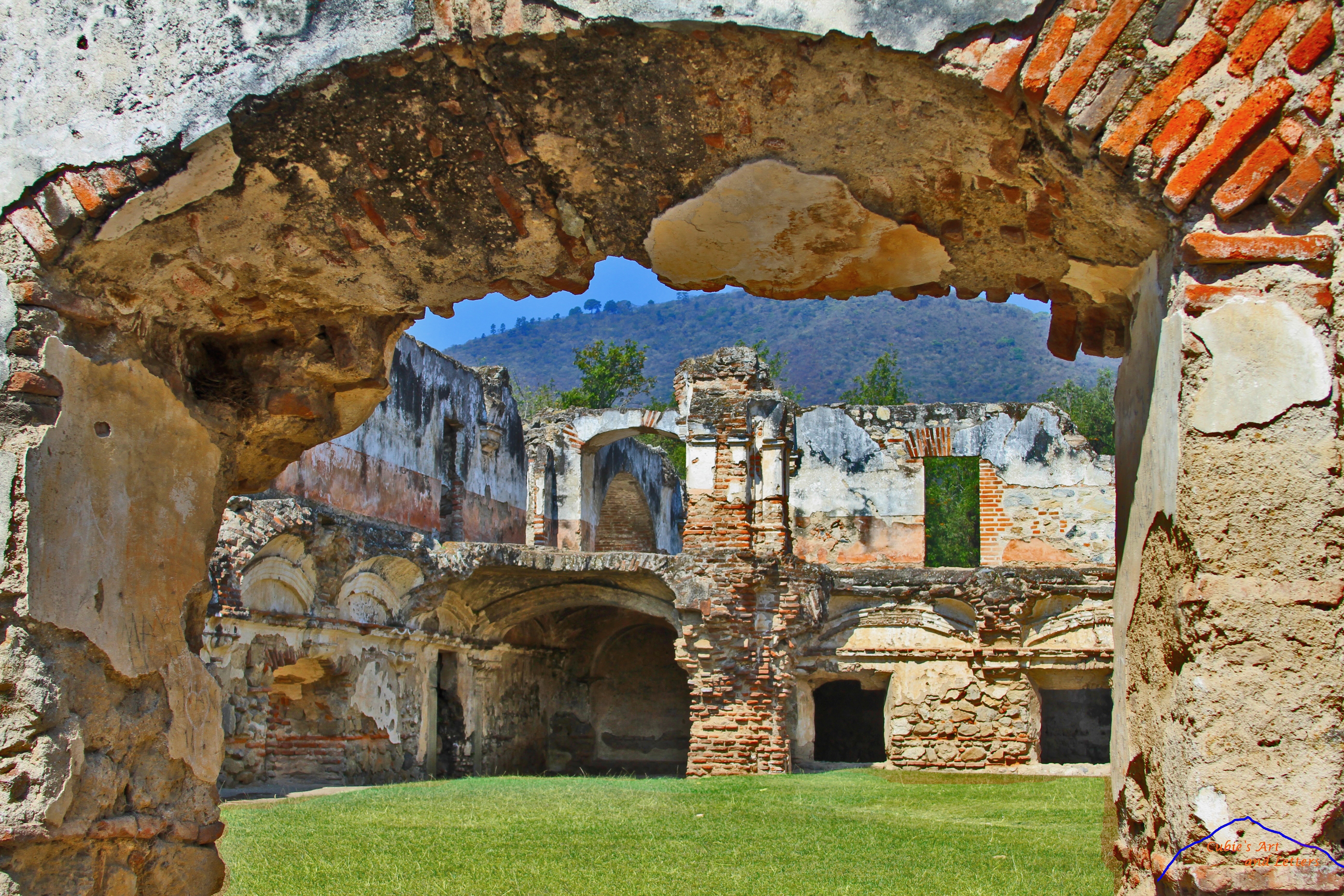
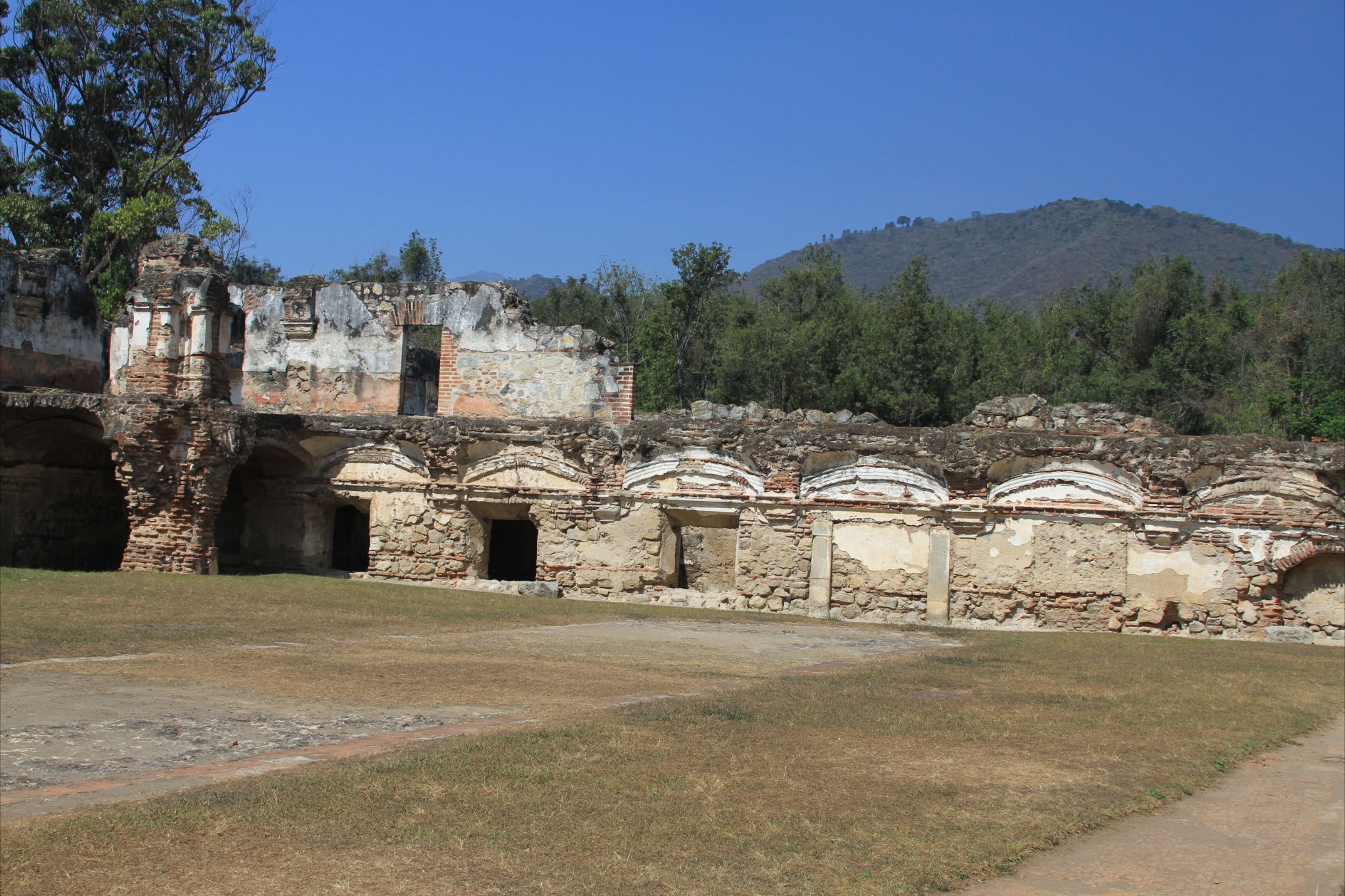
El Monasterio e Iglesia de la Recolección
In 1685 Friar Antonio Margil de Jesús arrived in Guatemala and traveled the length and breadth of the new Spanish kingdom evangelizing and teaching the doctrines of the church to the Mayan Indians of Mesoamerica. Two years after the friar’s arrival, additional friars arrived to support the work of Friar Margil. In 1695 the friars petitioned the Bishop of Guatemala for the construction of a missionary training school copying the school operated by the order in Mexico. Due to the existing number of missions within the Kingdom of Guatemala, the Bishop denied the first petition. A couple of years later, the indigenous population revolted against their Spanish rulers. Because of the friars’ work among the native population, the missionaries were held in high esteem and respected for their humbleness and tireless efforts to educate the young men. The Bishop, seeing the respect that these missionaries held among the local population summoned them to his church and requested their help in pacifying the enraged locals.


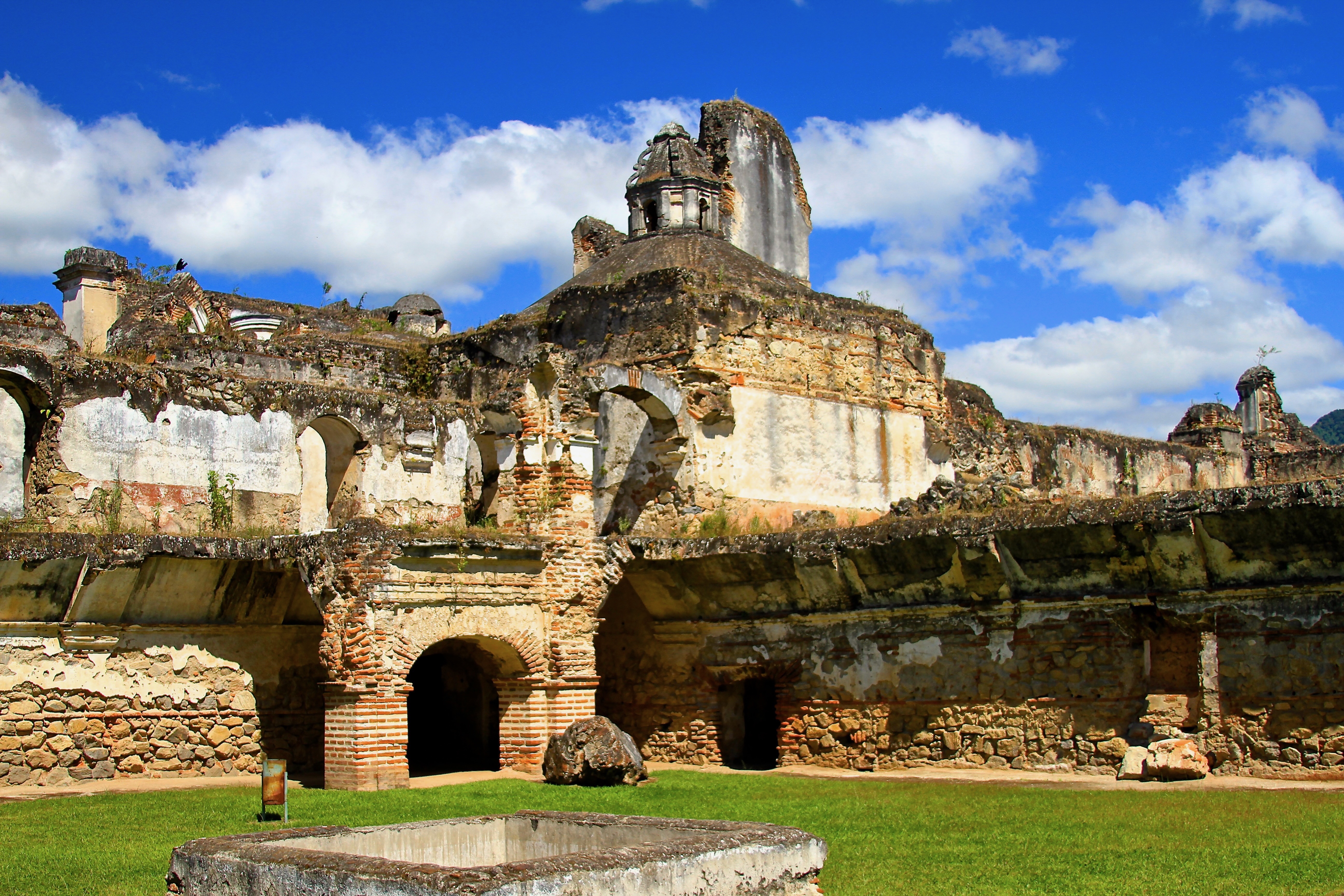
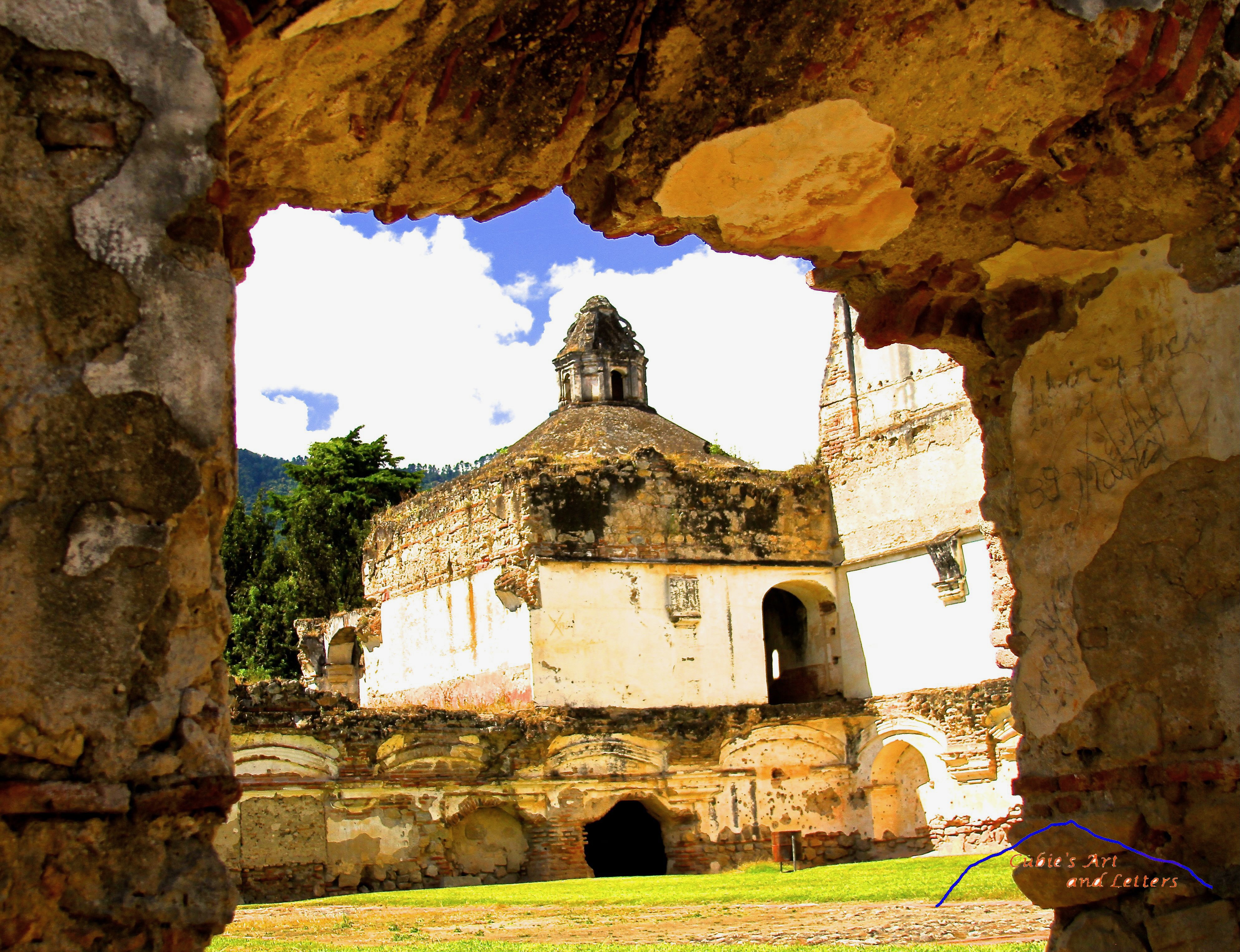

After a short period of negotiations, and a royal decree requiring the local government to not impede their efforts to establish a mission, the Bishop approved the friars’ petition for construction of a convent and soon the revolt was calmed. The Cabildo authorized the establishment of the Colegio de Cristo Crucificado on July 16, 1700. On September 8, 1701 construction began directed by the famous builder and architect, José de Porres. Seven years later, classrooms, a library, and rooms for the missionaries and teachers were finished. Work continued for another eight years adding additional teachings space, two large gardens, a nave, and a church.
One incomprehensible fact about the missionary endeavor and the monks who occupied the grand structure was the number of personnel assigned to the college and church. Although its size argues for a number much larger, historical data can only find evidence of 35 monks using La Recolección as their base of operations. Another confusing fact is the size of this structure. For missionaries who considered the whole country as their parish, each missionary spent relatively little time within the walls of the church. Then why the need for such a grandiose structure?
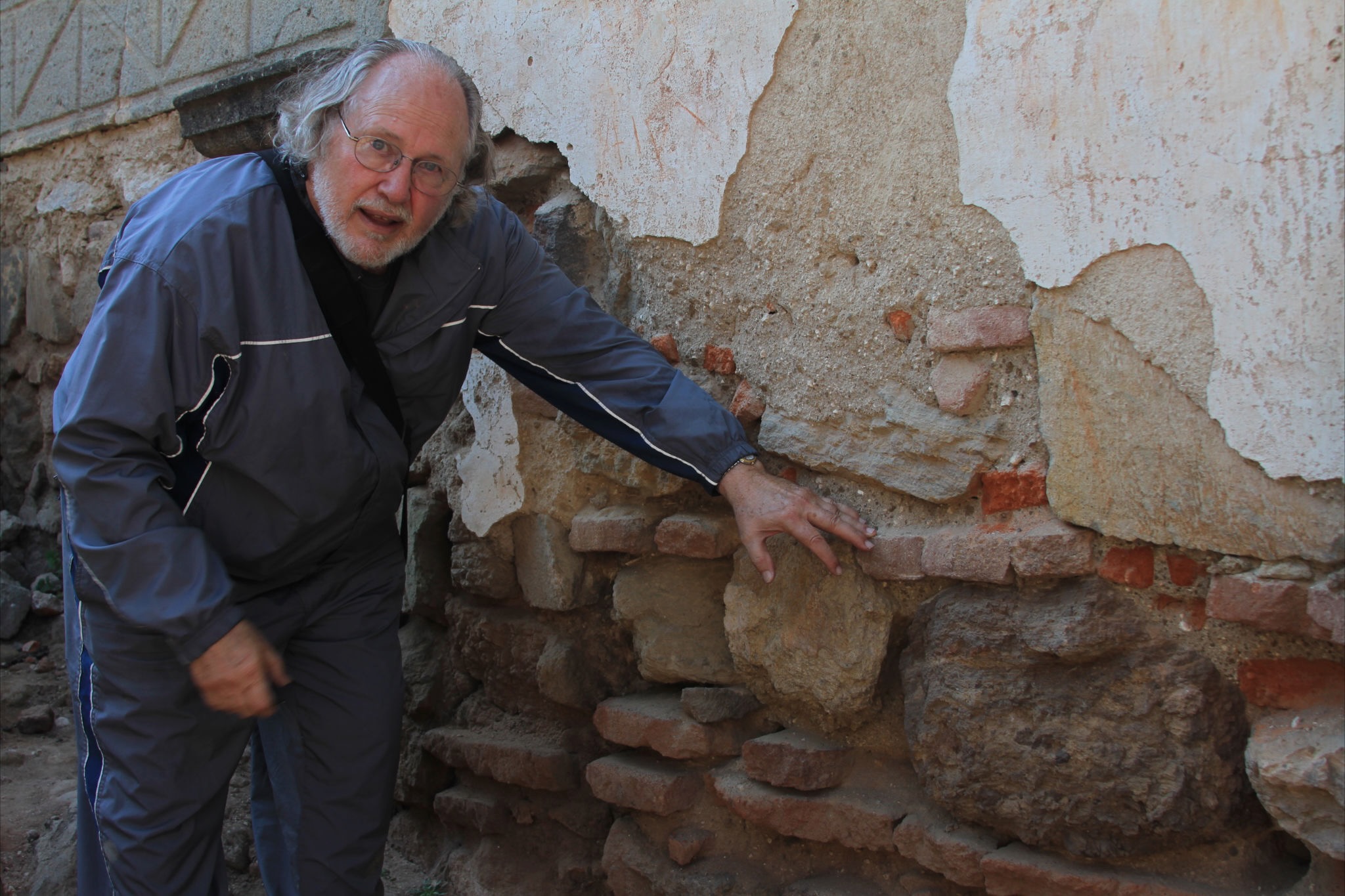
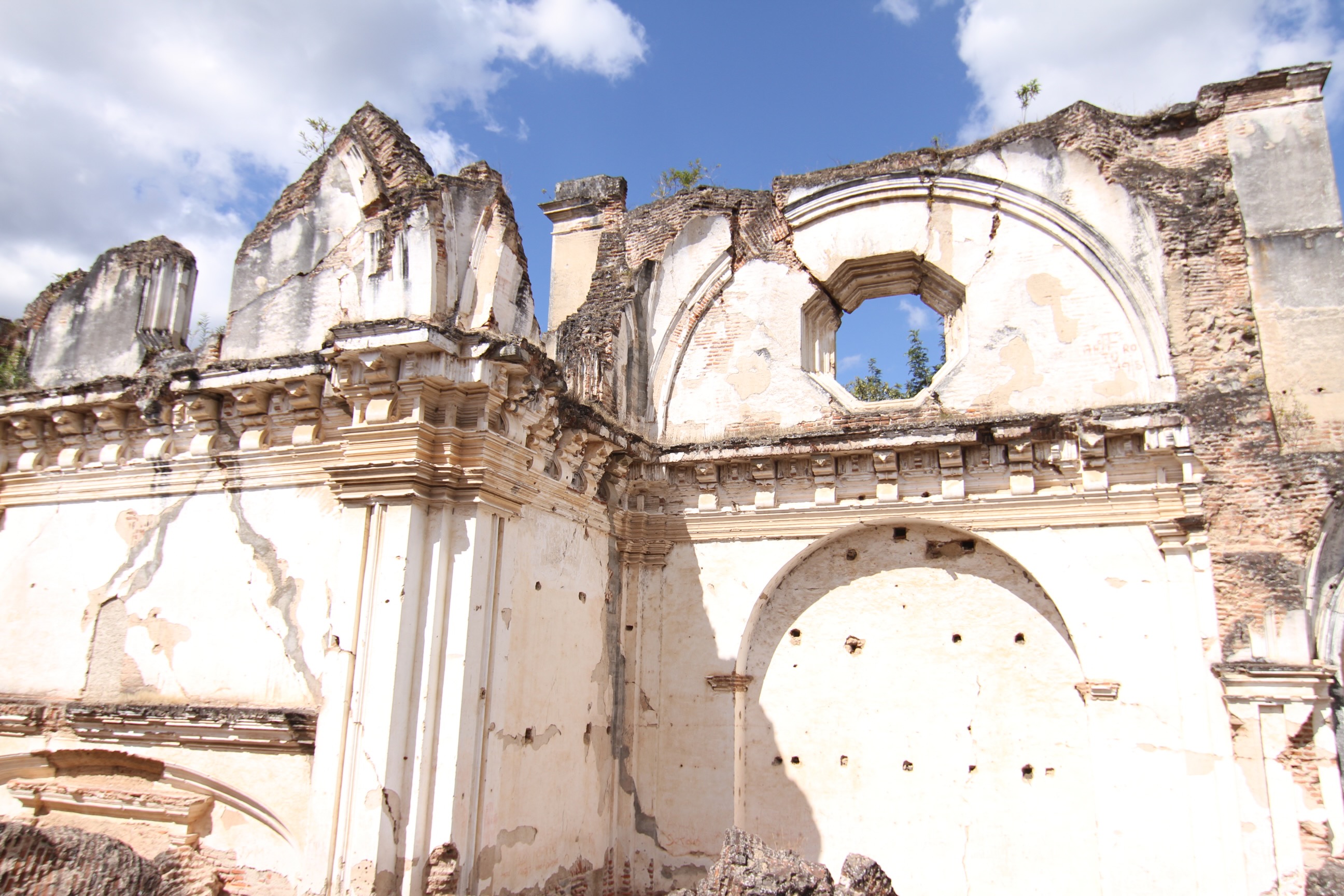


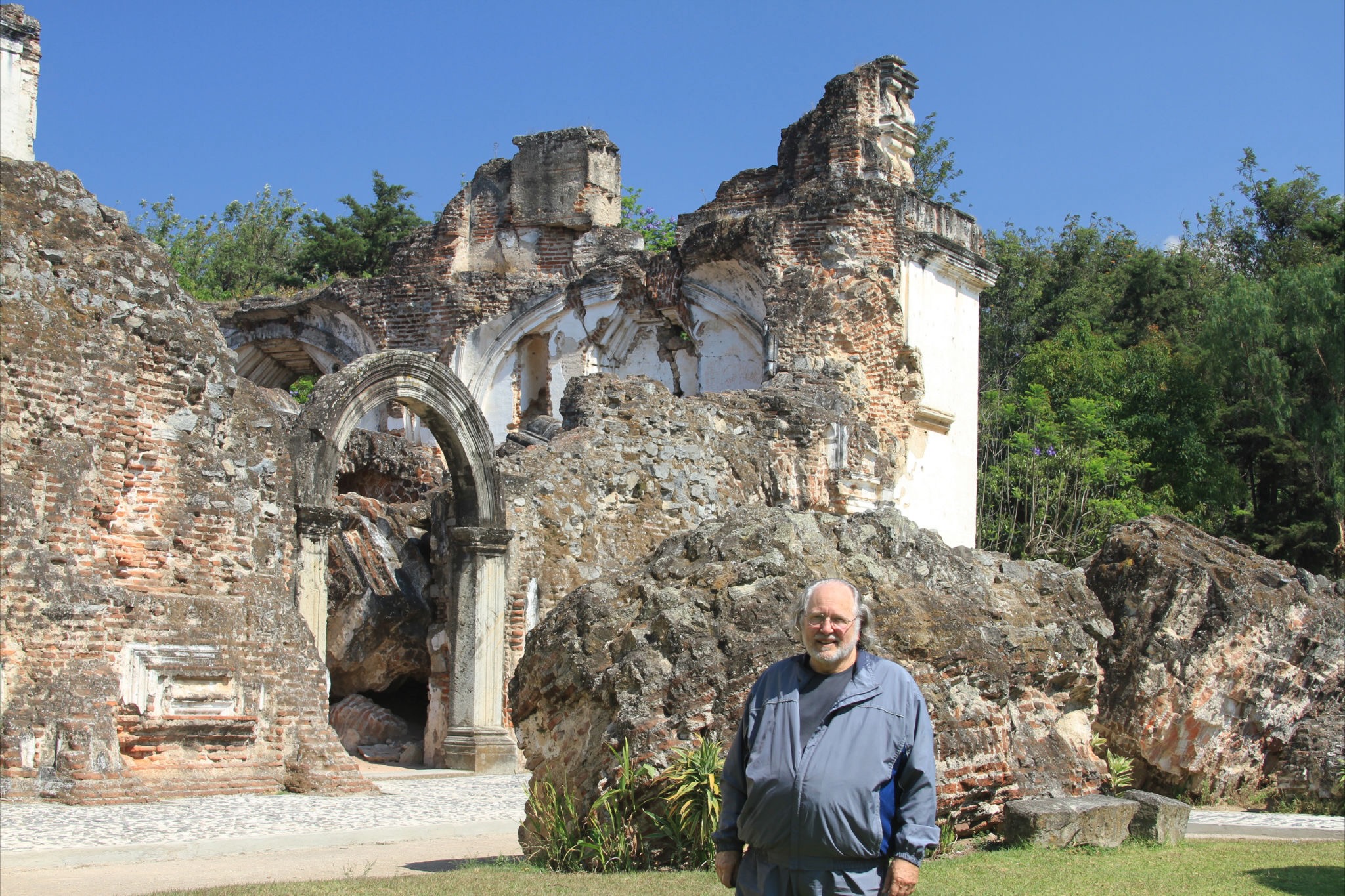
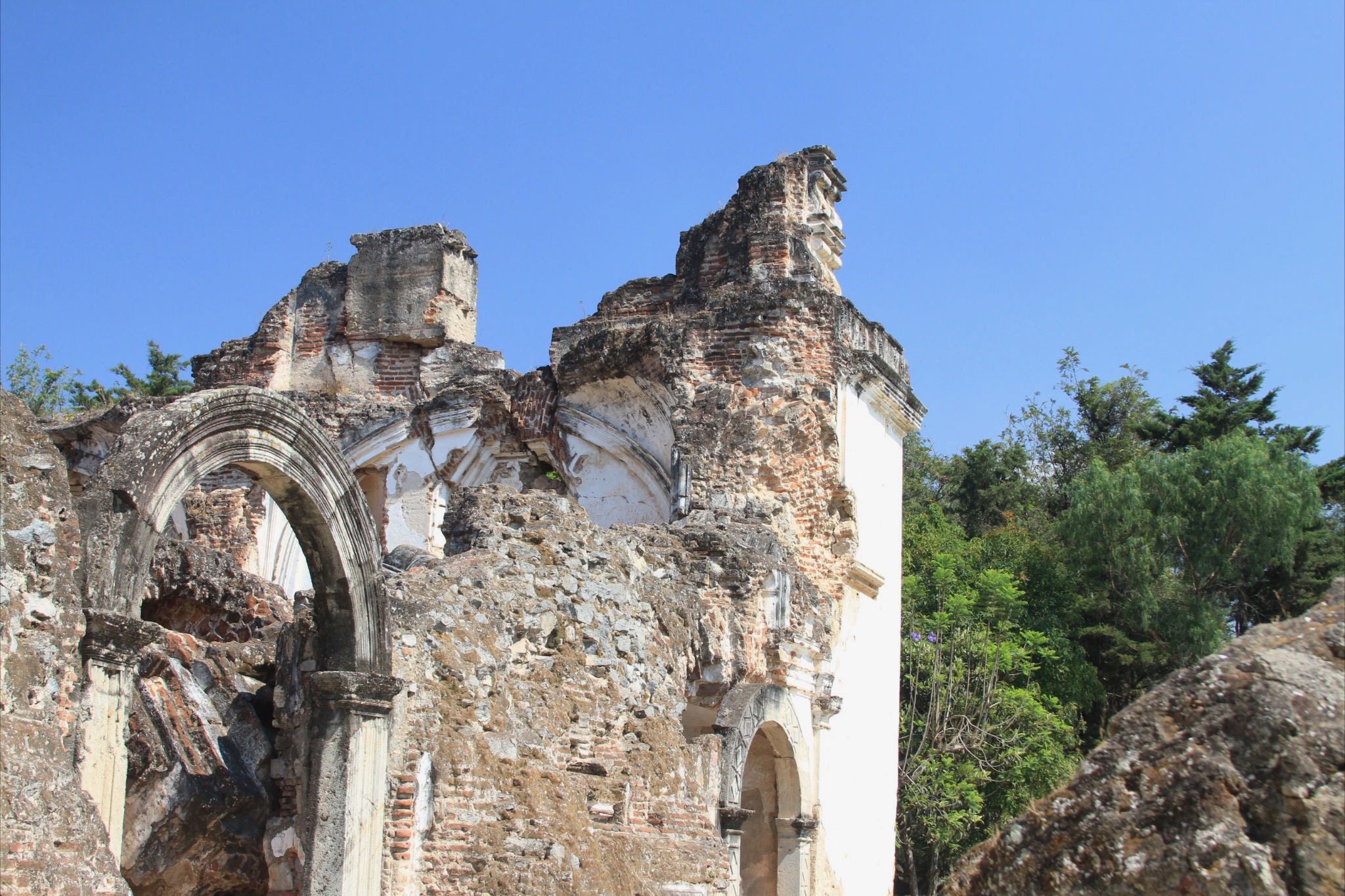
renovation of the two main gardens. City functions were often held in the magnificent and spacious gardens. In the early 1960s a swimming pool became the central attraction, but soon its cost of maintenance was higher than the city and Bishop’s office had expected. Throughout the twentieth century, local citizens carried away for other uses parts of the rubble, bricks, and stones. The swimming pools were filled in in the late 1990s. Today the structure lies in ruins. Glimpses of its earlier magnificence can be seen in the size of the fallen supports that measure as much as eight feet in diameter, walls that remain erect and their splendid cornices. In pictures taken prior to 1976, one 60 feet high arch still provided indication of the size and grandeur of the structure.
In order to better understand the context of the Iglesia y Monasterio de la Recolección, there is value in a brief understanding of Central America and its conquest. In 1524, Capitan Don Pedro de Alvarado, chief lieutenant to Don Hernando Cortez, conquered the K’iche kingdom. Spanish authorities named Don Pedro as the Governor of this new region. The new capital, founded in the Mayan city, Ixmiche, on Monday, July 25, 1524 became the headquarters for Spanish in Mesoamerica. De Alvarado named his capital Ciudad de Santiago de los Caballeros de Goathemalan (City of Saint James of the Knights of Guatemala). His kingdom encompassed regions known today as Chiapas and Soconusco of Mexico, Guatemala, El Salvador, Honduras, Nicaragua, and Costa Rica. Due to political and personal discord with the leaders of the Kaqchikel, he soon had to move his headquarters to the lush valley of Almolonga, known by local inhabitants as “stream of water.” The Spanish were most surprised at the beauty of the region and shortly after conquest decided to make the region near the Volcano Agua as its southern capital. Alvarado and his followers brought the name of the previous city with them. This would be the beginning of a series of sad events that overshadowed the Spanish rule in Mid America.

First was the death in July, 1541 of the conquistador, Don Pedro de Alvarado. At the death of her husband, Doña Beatriz de la Cueva took the place of her husband as Governor of Guatemala. She assumed her new position on September 9, 1541 and two days later was a victim of a strange and powerful storm that unleashed the fury of tons of water and mud from the nearby Volcano Agua. The city and palace of the governor were inundated by mud and debris taking as one of the victims the newly named governor, Señora de Alvarado. According to Indian lore, the fury of the storm was the result of an angry god who took umbrage at the Spanish for their maltreatment of the local Indians.
After the calamitous mudslide and destruction of the last capital site, architect Juan Bautista Antonelli was engaged to find a site and lay plans for a new capital. In the Valley of Panchoy, he found an abundant supply of pine and cypress trees for lumber and appropriate minerals such as lime and limestone for making cement, bricks, and plaster. In March, 1543, the Spanish authorities once again moved the site of the capital five miles away to the Panchoy Valley to what is today the city of Antigua. The new and impressive government and church buildings soon enhanced and distinguished the city that eventually grew to 25,000. In 1566 King Felipe II gave the city the title of “Muy Noble y Muy Leal” (Very Noble and Very Loyal). Although Spain’s primary purpose was to find gold, none was ever unearthed in Guatemala or the surrounding localities. Gold and silver were further north in Mexico or south in Peru. Regardless of the lack of treasure, Spanish authorities, local creole aristocracy, and merchants viewed climate and landscape with favorable attention and moved into the thriving and prosperous city.
From 1527 through 1740 no less than twenty churches and convents were built in this colonial paradise. By 1570, according to one visitor and author, there were numerous church establishments that consisted of one convent for nuns, La Concepción, and three convents for monks, La Merced, Santo Domingo, and San Francisco. These buildings and well as other church structures were built mostly of mud and lime mixtures buttressed by stone and cement columns. In addition to the convents and churches, the city also had two hospitals: one for Spanish and creole inhabitants; the other for Indians. In 1627, Thomas Gage, an English friar, visited Antigua and noted that there were nine churches and two convents for nuns, La Concepción and Sta. Catarina. Another visitor and writer noted in 1690 that there were 24 churches, including the Cathedral. This number of churches represents a very significant growth from Gage’s observations taken 63 years earlier. A major earthquake leveled or damaged many of the newly erected churches and religious structures in 1689. Most of these buildings were rebuilt or remodeled only again to suffer another destructing quake. One writer estimated that three thousand edifices were destroyed or badly damaged in the Santa Marta earthquakes of September, 1717. Although this number of damaged buildings may be exaggerated, by this time there were as many as 10,000 inhabitants living in the city. Even with shaking earth and smoke from the Volcano Fuego, dedicated churchmen and Spanish authorities rebuilt many of these damaged or destroyed buildings. The rebuilding after the 1717 earthquake was not accomplished without opposition. There were many who felt that they site of the capital was too vulnerable to earthquakes. Then in 1773 a series of major earthquakes again destroyed the colonial capital. Thousands of people died in the rubble of stone and adobe. The majority of the churches that had been built and rebuilt during the previous 250 years fell again, and this time most would not be rebuilt.
In 1776, three years later, Spanish authorities ordered that the capital moved again. This time the capital was moved four miles to the east, to a safer location in the Valley of the Shrine. The old name of the capital was changed to Nueva Guatemala de la Asunción (New Guatemala of the Assumption) and the old capital, Santiago de los Caballeros, was ordered abandoned.
In 1776 the Spanish authorities moved the capital to New Guatemala, but many of the inhabitants of Santiago de los Caballeros remained in the destroyed and devastated old capital. Nestled between the volcanos Agua, Fuego, and Acatenango, the city had been home to 30 monastic orders that had built beautiful and ornate churches and convents. The Spanish may have moved the capital, but they could not dislodge the souls and spirits of the citizens who determined to remain. Researchers and writers have estimated that as many as 25,000 persons lived in Santiago de los Caballeros at the time of the powerful earthquake that left the city in ruins in 1773. It is not known the exact number of person who moved to the new capital, it is known that several thousands of people remained in the old capital. They would not leave the city of their birth and the city of beauty that they had built. As years passed, the old city of Santiago was referred to as Antigua Guatemala, then later just Antigua.
 CubieSphere