
Why is the American Media Distrusted ? A Return to the Dark Ages
A significant portion of the American population has developed a deep distrust
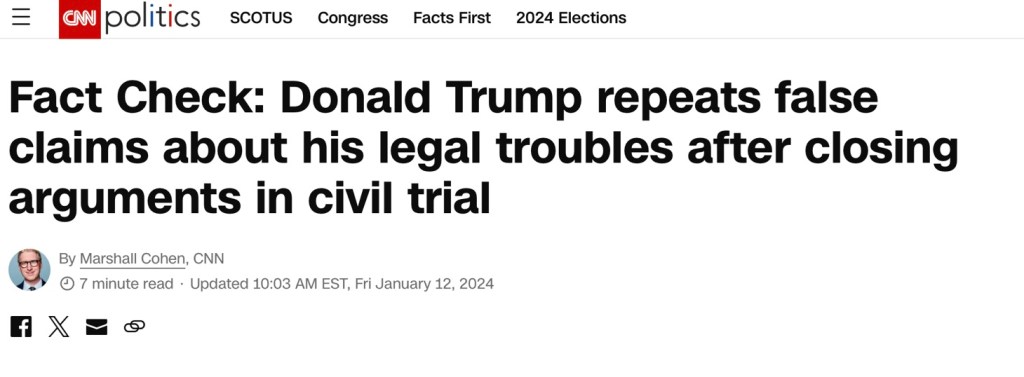
towards mainstream news media and its content. Over the past few years, I have engaged in discussions with numerous individuals who adamantly refuse to believe news stories produced by major sources like The NY Times, Washington Post, or major TV networks. While instances of biased, untrue, or false reporting do occur occasionally as a result of human error, it cannot solely be attributed to Trump. Mistrust in major news sources emerged long before Trump’s time in office. However, since Trump began his political campaign in 2015, he has continually attacked the news media and declared most news reports of him as fake news. In fact, this sentiment was reinforced when I recently spoke with relatives about Trump’s alleged illegal actions. Despite the “big lie” regarding the stolen 2020 elections being well-documented by trustworthy news outlets, these relatives simply do not accept that Biden won the presidential election. Strangely enough, they did not believe that Trump or the Republicans would engage in election manipulation, but they firmly believed that Biden would. They dismissed factual data solely because of its sources.
Democracy Dies in Darkness
Washington Post
A good media system is essential for a democracy. In order for citizens to make informed decisions, they rely on the news media to provide accurate and reliable information about the world around them. The media acts as a watchdog, holding those in power accountable and providing a platform for diverse voices to be heard. However, in recent years, there has been a growing sense of public distrust towards the news media, both in print and video formats. While the influence of former President Trump’s description of media products as “fake news” cannot be denied, it is important to recognize that public doubt in the media existed even before his presidency. This essay aims to explore the origins of this distrust, considering the human factor within media institutions and the impact of technological advancements on the dissemination of information. By examining these factors, we can gain a deeper understanding of the challenges faced by the news media and explore potential strategies to rebuild public trust in this crucial pillar of democracy.
The origins of public mistrust in the media can be traced back to various historical events and perceptions about media bias. Here are some key factors contributing to this distrust:
- Historical instances of media mistrust:
Throughout history, there have been instances where the media has failed to provide accurate and unbiased information, leading to a loss of public trust. For example, the Watergate scandal in the 1970s revealed investigative journalism’s critical role in holding power accountable. However, it also highlighted the potential for media bias and manipulation of facts. Similarly, the media’s coverage of the Vietnam War raised questions about its objectivity, as differing narratives emerged from the government and the media.
While most news organizations strive to maintain accuracy and impartiality, there have been instances where incorrect or biased news reporting has contributed to public skepticism. Here are a few notable instances that have raised concerns:
- Rolling Stone’s “A Rape on Campus” article (2014): Rolling Stone magazine published a story alleging a gang rape at the University of Virginia, which later proved to be based on unsubstantiated claims. The article faced significant criticism for inadequate fact-checking and damaging the reputation of both the alleged perpetrators and the university. This incident highlighted the risks of a rushed and incomplete verification process.
- Jayson Blair scandal at The New York Times (2003): Jayson Blair, a journalist at The New York Times, was found to have fabricated and plagiarized numerous stories. His actions raised serious concerns about journalistic integrity and led to internal investigations at the newspaper. The incident damaged public trust in the newspaper’s reporting and led to a reevaluation of editorial practices.
- Brian Williams’ false reporting on Iraq War incident (2015):NBC News anchor Brian Williams falsely claimed to have been aboard a helicopter that was hit by enemy fire during the Iraq War. After an investigation, it was revealed that Williams’ account was inaccurate and exaggerated. This incident tarnished Williams’ credibility and raised questions about the accuracy of his previous reporting.
- Misleading coverage during the Duke lacrosse case (2006): Media outlets, including CNN and The New York Times, extensively covered the alleged rape case involving members of the Duke University lacrosse team. Some initial reports exhibited a rush to judgment and presented a narrative that later turned out to be largely unfounded. The case highlighted the potential pitfalls of biased reporting and its impact on the presumption of innocence.
- BuzzFeed’s reporting on the Trump Tower Moscow project (2019): BuzzFeed published an article claiming that Trump instructed his former lawyer, Michael Cohen, to lie to Congress about the timing of negotiations for a Trump Tower project in Moscow. However, the Special Counsel’s Office disputed the accuracy of this story, stating that it did not fully align with the evidence they had obtained. BuzzFeed later acknowledged that it could not verify all aspects of the story.
- CNN’s erroneous report on Anthony Scaramucci and a Russian investment fund (2017): In 2017, CNN reported that Senate investigators were examining a meeting between Anthony Scaramucci, at the time a Trump campaign associate, and executives from a Russian investment fund. The report, based on a single anonymous source, later turned out to be inaccurate. CNN eventually retracted the story and three journalists involved resigned.
- Misleading framing and characterization: Some critics argue that news outlets, especially those perceived as leaning left, frequently presented news about Trump with a negative slant or framed stories in a way that highlighted controversy over accomplishments. Critics claim that this bias contributed to a perception of media hostility towards the Trump administration.
Instances of journalistic errors, plagiarism, or unethical conduct can and did erode public trust in the media. While these cases are relatively infrequent, they often receive significant attention, particularly in the era of social media. Even isolated incidents can be amplified and used as evidence to generalize distrust towards the entire media industry.
It is important to note that these factors are not exhaustive and may vary in their influence depending on cultural, political, and societal contexts. However, they provide a foundation for understanding the origins of public mistrust in the media. In order to rebuild trust, it is crucial for media institutions to address these concerns and work towards transparent, accountable, and unbiased reporting practices.
It is important to note that while Trump’s criticisms had a significant impact on public trust, they tapped into existing grievances and skepticism towards the media. To address the consequences of Trump’s criticisms, it is vital for media organizations to maintain their commitment to rigorous fact-checking, transparent reporting practices, and ethical standards. Rebuilding trust requires a collective effort from both journalists and the public to critically engage with news and information, separating fact from fiction.
It is always prudent to approach media criticism with discernment and consider the overall body of reporting on an individual or topic. While these examples highlight specific instances of bias or inaccuracies, they should not overshadow the broader body of reporting on Trump’s presidency or undermine legitimate journalistic efforts to scrutinize public figures. The impact of former President Trump’s criticisms of the media and his propagation of falsehoods cannot be underestimated in contributing to public mistrust. Here are some key aspects to consider regarding their impact:
- Undermining the Role of a Free Press and the Mainstream Media:
As a prominent political figure, Trump’s criticisms of the media undermined
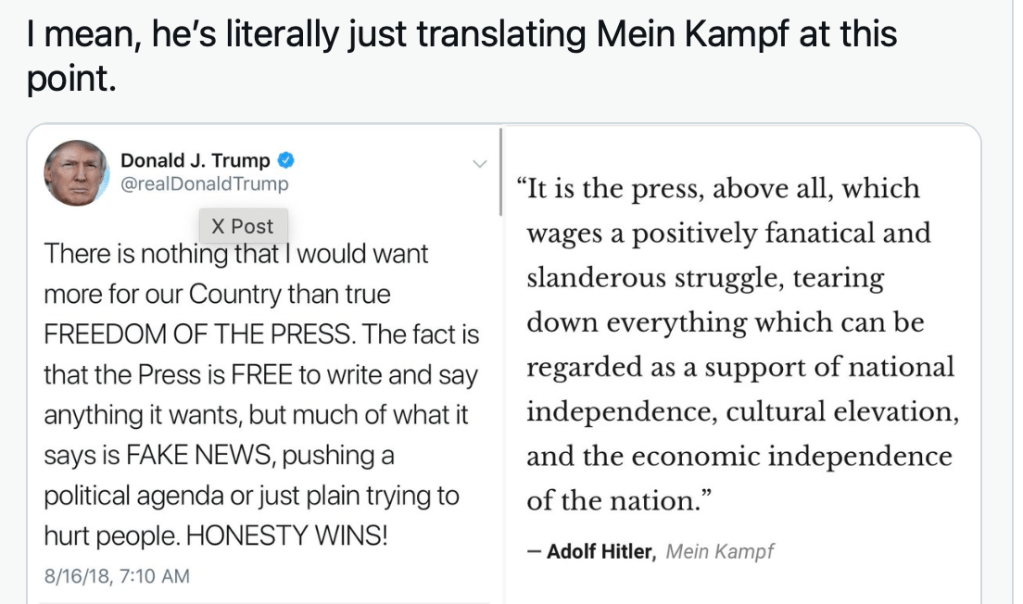
the crucial role of a free and independent press in a democratic society. By labeling unfavorable reports as “fake news” and questioning established facts, he sought to delegitimize the media’s role as a check on power and disrupt the flow of accurate information to the public. To address the consequences of Trump’s criticisms, it is vital for media organizations to maintain their commitment to rigorous fact-checking, transparent reporting practices, and ethical standards. Rebuilding trust requires a collective effort from both journalists and the public to critically engage with news and information, separating fact from fiction.
Trump’s relentless attacks on the media as “fake news” created a narrative that undermined the credibility of mainstream news organizations. By casting doubt on established sources of information, many of which have longstanding reputations for accurate reporting, Trump effectively eroded public trust in the media.
Trump’s rhetorical strategy played into existing partisan divisions and reinforced preexisting biases among his supporters. By presenting the media as biased against him and his agenda, he effectively polarized public opinion further, solidifying existing support and deepening skepticism among his followers.
The impact of former President Trump’s criticisms of the media and his propagation of falsehoods cannot be underestimated in contributing to public mistrust. Trump’s rhetorical strategy played into existing partisan divisions and reinforced preexisting biases among his supporters. By presenting the media as biased against him and his agenda, he effectively polarized public opinion further, solidifying existing support and deepening skepticism among his followers.
Trump’s administration was marked by a significant number of false statements and misleading claims. By repeatedly disseminating lies and inaccurate information and promoting conspiracy theories, he normalized the presence of misinformation in public discourse. This normalization had a cascading effect on public perception and the acceptance of falsehoods, making it more challenging for the media to be trusted as purveyors of accurate information.
Trump surrogates and Trump’s propensity for spreading conspiracy theories amplified alternative narratives that were previously confined to the fringes of society. By using his platform to lend legitimacy to these theories, he further destabilized public trust in factual reporting. This phenomenon was particularly evident during the COVID-19 pandemic, with the promotion of unproven treatments and baseless claims, leading to public confusion and potential harm.
- Normalization of misinformation:
The normalization of misinformation refers to a situation where false or misleading information becomes more widely accepted and integrated into public discourse. Here are a few examples and explanations of how this normalization occurs:

Social media echo chambers: Social media platforms often use algorithms that show users content similar to what they have previously engaged with. This can create echo chambers, where individuals are exposed only to information that aligns with their preexisting beliefs. As a result, misinformation can be reinforced and spread within these closed networks, normalizing false narratives.
Bot networks and viral content: Automated accounts or “bots” on social media platforms can disseminate misinformation rapidly, amplifying its reach and making it appear more prevalent and widely accepted than it actually is. When false information goes viral, it can quickly become normalized, as people encounter it repeatedly and may not question its veracity.
News outlets amplifying falsehoods: Sometimes, even reputable news outlets can unintentionally contribute to the normalization of misinformation. If a false claim or rumor originates from a prominent source or political figure, news organizations may feel compelled to report on it, even if only to fact-check or debunk it. However, this coverage can inadvertently give legitimacy to the misinformation and expose it to a broader audience. As a prominent political figure, Trump’s criticisms of the media undermined the crucial role of a free and independent press in a democratic society. By labeling unfavorable reports as “fake news” and questioning established facts, he sought to delegitimize the media’s role as a check on power and disrupt the flow of accurate information to the public.
Trump’s administration was marked by a significant number of false statements and misleading claims. By repeatedly disseminating inaccurate information and promoting conspiracy theories, he normalized the presence of misinformation in public discourse. This normalization had a cascading effect on public perception and the acceptance of falsehoods, making it more challenging for the media to be trusted as purveyors of accurate information.
An example of the normalization of misinformation can easily be seen in a suit brought by Dominion Voting Systems against Fox News. Dominion accused Fox News, along with some of its hosts and contributors, of disseminating false information about the company’s involvement in alleged election fraud during the 2020 election. Dominion sought damages of $1.6 billion.
In a summary judgment on March 31, 2023, Delaware Superior Court judge Eric M. Davis ruled that none of the disputed statements Fox News made about Dominion were true and ordered a trial to determine if the network had acted with actual malice. Several prominent Fox News personalities and senior executives had knowingly and with malice routinely made false statements defaming Dominion.
On April 18, 2023, the judge announced that the parties had reached a settlement. Fox News agreed to pay Dominion $787.5 million and acknowledged the court’s earlier ruling that Fox had knowingly broadcast false statements about Dominion.
Political manipulation and deliberate disinformation campaigns: In some cases, misinformation is deliberately disseminated as part of organized disinformation campaigns, often with political motives. Such campaigns aim to sow confusion, undermine public trust, and legitimize false narratives. When misinformation is consistently repeated by influential figures or amplified through strategic messaging, it can gradually be normalized and accepted as part of the public discourse.
Coverage of political campaigns and elections: During political campaigns and elections, biased reporting or sensationalism can be observed from various news outlets. Some media organizations have faced criticism for favoring certain candidates or parties, selectively highlighting or omitting information, or engaging in clickbait tactics to generate revenue. This contributes to public skepticism and reinforce the perception of media bias.
It’s important to note that these examples should not overshadow the many instances where the news media upholds journalistic standards, corrects mistakes promptly, and provides reliable and unbiased information. The presence of inaccuracies or bias in some cases underscores the need for media literacy, fact-checking, and critical consumption of news to ensure informed public discourse.
- Perception of media bias:
The perception of media bias has fueled public skepticism. People often hold the belief that news organizations have political or ideological agendas that influence their reporting. This perception can be subjective, as individuals tend to seek out news sources that align with their own beliefs, leading to further polarization. As a result, trust in the media becomes divided along partisan lines, impacting the credibility of mainstream news outlets. Here are some examples and explanations of a perception of media bias:
Selection bias: Individuals might perceive media bias when they believe that certain topics or viewpoints are consistently favored or neglected in news coverage. For instance, if a news outlet predominantly covers stories that align with a particular political ideology or fails to provide balanced coverage on important issues, it can create a perception of bias.
Framing bias: Media bias can also be perceived through different frames or angles given to a story. The emphasis placed on specific aspects or the language used to describe events can influence the way a story is perceived. For example, the framing of an economic policy initiative as either a “tax cut” or a “tax hike” can produce different perceptions of bias, depending on one’s political leanings.
Source bias: Perception of media bias can stem from the belief that news outlets rely on biased or partisan sources. If particular sources, such as think tanks or political pundits, are consistently cited or given disproportionate airtime, it can create an impression of bias by association.
Interpretation bias: The interpretation and analysis of events can also contribute to the perception of bias. Individuals may feel that media outlets interpret information in a way that supports a particular narrative or agenda, rather than providing objective analysis. This perception can be influenced by the editorial stance of a news organization or the political background of key journalists or commentators.
Confirmation bias: Confirmation bias occurs when individuals seek out news sources that affirm their existing beliefs, reinforcing their perception of media bias. This bias is often evident in the rise of alternative media ecosystems that cater to specific ideologies, where individuals actively avoid sources that challenge their views.
Personal ideological differences: Individuals’ own ideological leanings can influence their perception of media bias. Political or ideological predispositions might lead people to interpret news coverage through a lens that perceives bias against their favored viewpoint.
A perception of bias does not necessarily equate to actual bias. Media organizations should strive for fairness, balance, and transparency in their reporting to address these perceptions. Public discourse, media literacy, and critical thinking skills are essential for individuals to navigate media bias and form informed opinions.
- Sensationalism and commercialization:
The rise of 24-hour news cycles and the need for higher ratings have led some media outlets to prioritize sensationalism over accuracy. Sensationalized news stories, clickbait headlines, and infotainment formats can erode public confidence in a media system driven by profit. When profit-driven interests supersede journalistic integrity, it undermines the perception of news organizations as impartial sources of information.
Many media organizations rely on advertising revenue to sustain their operations. In a highly competitive media landscape, this can lead to a focus on generating high web traffic or viewership, often prioritizing clickable and attention-grabbing content over in-depth reporting. This emphasis on driving engagement can create a perception that news outlets prioritize generating revenue and garnering attention over delivering objective and comprehensive reporting.
To increase readership or viewership, media outlets may resort to clickbait headlines or sensationalized narratives, exaggerating or dramatizing stories to attract attention. This approach can lead to a perception that news outlets prioritize generating excitement or shock value rather than providing accurate and nuanced reporting.
Infotainment and the 24-hour news cycle: The demand for continuous news coverage has led to the rise of the 24-hour news cycle and infotainment, which blends news and entertainment elements. This style of reporting often focuses on sensational stories, personalities, and conflicts to capture the audience’s attention. As a result, substantive reporting may take a backseat, leading to skepticism about the quality and depth of the information provided.
Lack of context and analysis: In an effort to quickly deliver news to the audience, media outlets may prioritize speed over providing comprehensive context or analysis. Stories are often reported in isolated, bite-sized pieces, which can diminish the audience’s understanding of complex issues. This superficial approach fosters skepticism since readers may perceive a lack of depth or critical analysis.
Bias and agenda-driven reporting: Some media outlets are accused of promoting specific political or ideological agendas, which can fuel skepticism among readers. When news reporting aligns with a particular viewpoint or consistently presents a biased narrative, it can erode trust and create a perception that reporting is driven by ulterior motives rather than an objective pursuit of truth.
To address these concerns, media organizations should prioritize ethical reporting standards, focus on delivering accurate and well-verified information, provide context and analysis, and ensure transparency in their revenue models. Similarly, media literacy skills allow readers to critically evaluate news sources, distinguish between sensationalism and substantive reporting, and form informed judgments about the information they consume.
- Errors and Misconduct
Instances of journalistic errors, plagiarism, or unethical conduct can further erode public trust in the media. While these cases are relatively infrequent, they often receive significant attention, particularly in the era of social media. Even isolated incidents can be amplified and used as evidence to generalize distrust towards the entire media industry.
It is important to note that these factors are not exhaustive and may vary in their influence depending on cultural, political, and societal contexts. However, they provide a foundation for understanding the origins of public mistrust in the media. In order to rebuild trust, it is crucial for media institutions to address these concerns and work towards transparent, accountable, and unbiased reporting practices.
- Amplification of Conspiracy Theories
Trump’s propensity for spreading conspiracy theories amplified alternative narratives that were previously confined to the fringes of society. By using his platform to lend legitimacy to these theories, he further destabilized public trust in factual reporting. This phenomenon was particularly evident during the COVID-19 pandemic, with the promotion of unproven treatments and baseless claims, leading to public confusion and potential harm.
Here are three examples of conspiracy theories that were perpetuated or promoted by individuals or within the Trump circle:
Birtherism: One prominent conspiracy theory that gained traction during Donald Trump’s rise to political prominence was the “birther” conspiracy theory. Trump was known for vocalizing doubts about the legitimacy of former President Barack Obama’s birthplace and citizenship. He repeatedly questioned whether Obama was born in the United States, suggesting that he was not eligible to hold the presidency. Despite overwhelming evidence to the contrary, Trump continued to perpetuate this theory for many years.
Deep State: Another conspiracy theory often mentioned within the Trump circle was the concept of a “deep state” or shadowy government working against Trump’s administration. The idea behind this theory is that career bureaucrats and officials within the government were conspiring to undermine and sabotage Trump’s policies and presidency.
Election Fraud: Following the 2020 presidential election, Donald Trump and his allies promoted baseless claims of widespread election fraud. Despite multiple courts dismissing these claims and the Department of Justice finding no evidence to support them, Trump insisted that the election was stolen from him. This conspiracy theory, which fueled the January 6th insurrection at the U.S. Capitol, has been widely debunked and denounced by election officials, including those appointed by Trump.
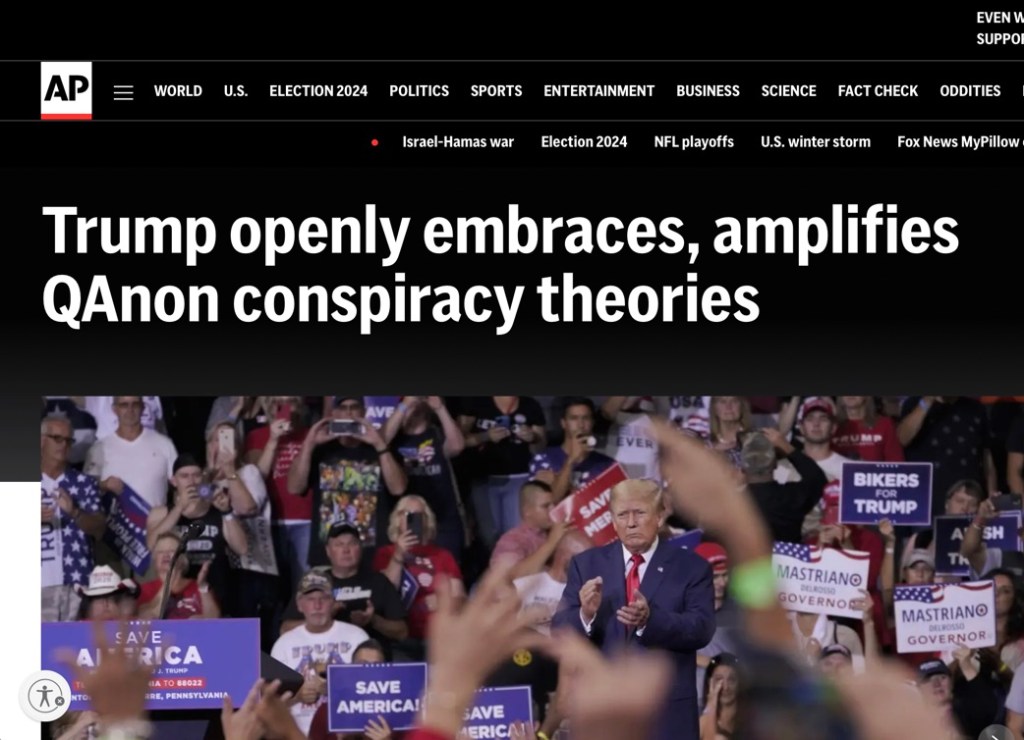
QAnon: While not directly associated with Trump himself, the QAnon conspiracy theory gained significant traction within Trump’s support base. QAnon claims that a secret cabal of satanic pedophiles is plotting against Trump and his followers. This conspiracy theory spread through online forums and social media, with some of its supporters even running for political office. Trump has been known to retweet or endorse accounts associated with QAnon, further perpetuating its influence.
It is important to note that perpetuating conspiracy theories is damaging, they erode trust in democratic institutions, and undermine public discourse. It is crucial for individuals to critically evaluate information and rely on reputable sources to prevent the spread of misinformation and unsubstantiated claims such as those described above.
- Trump’s False Claims Fueled the Mistrust

The impact of former President Trump’s criticisms of the media and his propagation of falsehoods cannot be underestimated in contributing to public mistrust. Here are some key aspects to consider regarding their impact:
Trump’s relentless attacks on the media as “fake news” created a narrative that undermined the credibility of mainstream news organizations. By casting doubt on established sources of information, many of which have longstanding reputations for accurate reporting, Trump effectively eroded public trust in the media.
Trump frequently criticized mainstream media outlets by labeling them as “fake news” and “the enemy of the people.” By framing the media as untrustworthy, Trump effectively reinforced the biases of his supporters and encouraged them to seek alternative sources that aligned with their existing beliefs.
Former President Donald Trump frequently used the term “fake news” to criticize various media outlets. Here are some examples of his claims followed by instances where his claims were found to be incorrect or misleading:
Election-related claims: Trump made numerous assertions of widespread voter fraud during the 2020 U.S. presidential election. He claimed that millions of votes were fraudulent and that the election was stolen from him. However, multiple courts, state officials, and the U.S. Department of Justice found no evidence to support these claims. Additionally, the Cybersecurity and Infrastructure Security Agency called the 2020 election “the most secure in American history.”
Inauguration crowd size: Trump claimed that the attendance at his inauguration in 2017 was the largest ever, both in-person and television viewership. However, photographic evidence and comparisons to previous inaugurations clearly showed that his crowd size was smaller. Nielsen ratings also indicated lower viewership compared to previous inaugurations.
COVID-19 pandemic: Trump frequently made claims about the COVID-19 pandemic that were contradicted by public health experts. For instance, he downplayed the severity of the virus, claimed that it would “disappear,” and suggested unproven treatments like hydroxychloroquine as potential cures. These statements contradicted the views of health experts and scientific consensus.
Obama wiretapping claim: In 2017, Trump tweeted that former President Barack Obama wiretapped Trump Tower during the 2016 election. However, subsequent investigations by the FBI and other intelligence agencies found no evidence to support this claim.
Climate change denial: Trump has expressed skepticism about climate change, calling it a “hoax” and withdrawing the United States from the Paris Agreement. However, scientific consensus agrees that climate change is a real and significant global challenge caused by human activity.
For the past 7 years, Trump has effectively used these false claims to besmirch the media creating confusion and doubt. Each of the above false claims have been debunked and proved true, but Trump’s faithful followers refuse to accept the truth regarding these claims. Without doubt, America has entered an era of post-truth and much of this is a reaction to historical enlightenment where evidence and data are subjected to unfounded beliefs..
Summary
The American media is facing widespread distrust among a significant portion of the population. This distrust has developed over the past few years, with many people refusing to believe news stories produced by major sources such as The NY Times, Washington Post, or major TV networks. While instances of biased, untrue, or false reporting do occur occasionally, much of the mistrust can be attributed directly to Donald Trump. The mistrust in mainstream news sources existed long before Trump’s time in office, however Trump’s attack on the news media and his dismissal of most news reports about him as “fake news” reinforced this sentiment. Many individuals who were previously skeptical of news outlets now completely reject their content. For example, when discussing Trump’s alleged illegal actions, some individuals refuse to accept the well-documented “big lie” regarding the stolen 2020 elections. Despite trustworthy news outlets providing factual data, these individuals dismiss it solely because of Trump’s denigration of its sources.
It is important to note that a reliable media system is crucial for a functioning democracy. Citizens rely on the news media to provide accurate and reliable information, enabling them to make informed decisions. Although some media outlets have erred, accurate assessment of their outputs requires an analysis of their total news, not just a few cherry picked inaccurate products. The media also serves as a watchdog, holding those in power accountable for their actions. However, the distrust that Trump has inserted into the media and aspersions cast toward certain networks and reporters in the American media undermines this critical role and the democratic process as a whole.
One contributing factor to the distrust in the media is the perception of bias. Trump’s continuing lies and propagation of misinformation has caused some individuals to believe that major news outlets have a predetermined agenda and intentionally manipulate facts to fit their narrative. This perception has been further fueled by the rise of right wing partisan news outlets and the proliferation of social media platforms where misinformation is purposely spread.
Another factor is the erosion of trust due to genuine reporting errors. Although news organizations strive to maintain accuracy, mistakes can happen. In our digital age, these errors are often amplified, leading to a loss of credibility. Skepticism arises when news organizations fail to promptly correct inaccuracies or transparently address their mistakes.
Additionally, the growing polarization of American society has contributed to the mistrust in media. With the rise of echo chambers on social media, people are increasingly exposed to news and information that aligns with their existing beliefs. This selective exposure leads to confirmation bias, where individuals tend to trust sources that reinforce their preconceived notions while dismissing those that challenge their views.
In conclusion, the widespread distrust of the American media is a complex issue with various causes. While Trump’s rhetoric and attacks on the media have played a major role, consumers much recognize that mistrust existed prior to his presidency. Factors such as perceived bias, reporting errors, and the polarization of society have all contributed to the erosion of confidence in the public’s acceptance of most news and believing Trump’s claim that any unfavorable news about him is fake news. In this 21st century we are living in a post-truth era where facts are subjugated to mere beliefs. This is a return to the “Dark Ages”, a pre-enlightenment era. Rebuilding trust in the media is crucial for a thriving democracy, as it ensures citizens have access to accurate information to make informed decisions and hold those in power accountable.
 CubieSphere