
The tragic story of Beto illustrates the intersection of poverty and ignorance, leading to preventable suffering and death. The narrative emphasizes the role of education in promoting sustainable change, highlighting how the church can fulfill its Biblical imperative by providing practical support and teaching. This holistic approach to aid focuses on empowering communities to address their own needs, transcending short-term relief efforts.
BETO:
Education: Educate to Understand
Beto could have been any normal, two-year-old boy, running and playing in the shade of the lean-to attached to his home. Instead, Beto was lying in a hammock, slowly dying. He had stopped taking any food two days earlier; so weak that he could only take small sips of water over his parched lips. His stomach was extended like a pregnant woman, the sparse hair that he had left had turned a rusty yellow. The little boy’s lips were swollen, and his eyes had sunk deep into his head. Was any help available that could save the life at this little boy?


Clean water, healthy food, and an environment free from filth could have prevented Beto’s sickness. Had beto’s mother known these simple rules, he may not have had to suffer such lethal pain. Although the eastern region of El Salvador had been embroiled with violence for many years, violence did not cause Beto’s sickness. His sickness was the result of ignorance; parental ignorance that the Salvadoran church, Christ’s earthly body, could have remedied. In 1982 there were dozens of evangelical churches in the department of Morazán preaching a message of salvation, but few if any taught their members how to live as God’s creation on earth.
New Testament writers refer to the church as the body of Christ. Ancient writers employed the term body because they knew that the spiritual body reflected living, breathing individuals who needed earthly sustenance and care. The health of an individual body mirrors the quality of the food and drink consumed. When a spiritual body eats and drinks well, the body will be strong and vibrant. “For by one Spirit are we all baptized into one body and have been all made to drink into one Spirit” (I Cor. 12:13). As one pastor told me after seeing our work in Colima, “we Salvadoran evangelicals have never been taught that helping the needy is a Biblical imperative.” In many Latin America countries, the spiritual body is weak because its education is deficient. Many Latin American churches teach much about salvation and a vertical relationship with our heavenly Father, but few see as a spiritual labor “good works” that serve the church’s poor neighbors. As church leaders become educated to what the Scriptures say about good works, they see how their actions reflect a lack of understanding Biblical truth: Biblical teaching as well as being an evangelistic tool reflect Biblical truths. Education provides a medium to understanding the responsibility of the church toward the needy and suffering.
A Treatable Cause of Human Suffering
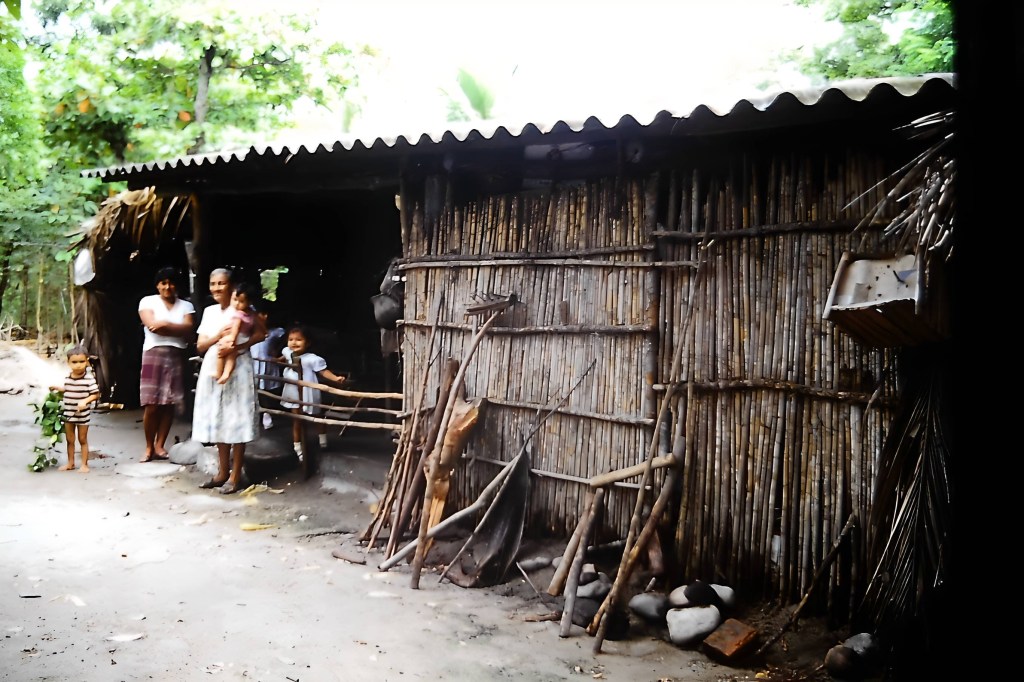
The social and economic plight of Beto’s mother paralleled that of many rural women caught in the circumstance of civil war. She last saw her husband when Beto was born. Two days later he left with his regiment of guerrilla soldiers. She had no idea if he was alive or dead. She could not read nor write; therefore, newspaper accounts of the war gave her no clue as to his whereabouts. So much time had passed since she last saw him, and now she simply assumed that he was dead. In her little shack, located in one of the many caserios (neighborhoods) of nearby San Francisco de Gotera, she was almost isolated from the big world around her. Her neighbors were of little help for they too faced kindred troubles.
Realizing that Beto was very near death, I grabbed him in my arms and ran down to the quickly erected clinic that the medical team had assembled. The doctors and medical students were Salvadoran Christians who simply wanted to help their unfortunate compatriots. One of the young physicians quickly examined the boy then looked at me saying, “On this trip we did not bring medicines that this little boy needs, besides, this boy needs hospitalization.”
Dr. Salaverría and a nurse rushed Beto to the nearby hospital. The physician in charge accepted Beto, but apologetically explained that “We have no IV solution either. It has all been taken by the army for their needs.” The hospital did everything possible under the circumstances to save Beto, but he died early the next morning.
The next day, Dr. Salaverría returned to the hospital to check on the boy. Grimly, he returned to the community and Beto´s mother with his body. I had the sad task of placing Beto’s body in his grieving mother´s arms. Beto’s mother lived only two blocks from where the temporary clinic had been assembled. His body was not heavy, but somehow, that short walk seemed like a journey around the world. My thoughts were extremely heavy: If only his father had been around. Why had the guerrillas taken Beto’s father? Why had the government army taken the IV solutions that could have saved Beto’s life? Wasn’t there a local evangelical church that could have helped the mother recognize the health dangers that lurked within her house? If only there had been medicine! As I walked up the path toward Beto’s home, I realized that there were many conditions that took this poor boy’s life. These conditions could have been overcome had someone taken the time and energy or Christian compassion and understanding to teach Beto’s mother. Surely, she loved her little boy and surely had she known how or what to do, she would have done anything possible to save his live. As I walked up that lonely path that day holding Beto’s lifeless body, I realized that Beto did not have to die, but he did.
Somehow, Beto’s mother already knew he had died. No one had told her; it was something that only a mother could know. Earlier she had asked a neighbor to build a casket. Beto’s wooden box was waiting for him when I arrived with his body. Gently, I laid the body in the casket. This was a new experience for this North American. But it was one of the many ordeals that formed in my heart a desire to do what I could to help God’s wonderful creation, humankind. One thing I could do was help the Salvadoran church see that God was concerned about the poor.
When Beto died, Paralife Interentional was only a dream and a vision that had begun to form after the Jutiapa and El Espíritu experiences. But somehow, this gringo knew that Beto’s death was not necessary. At the time, I thought that Beto’s death was due to the reasons mentioned above; the Holy Spirit was about to teach me that more complex considerations caused Beto’s death. These considerations were not unsolvable conditions. Rather, these were situations giving the church an opportunity to do the same work that Jesus did on earth. Without doubt, these were appropriate conditions in which the church could preach the gospel of the kingdom and heal the sick, clothe the naked, and feed the hungry. But the opportunity for the church was much greater; it could also show its faith in Christ by working to prevent sickness. I was about to learn that the evangelical church had a role to play much greater than that of just preaching the Word. The Word, I was to learn, had a reach far beyond the pulpit.
The Scripture speaks of the economically poor hundreds of times. Little doubt can exist that the poor, those with few earthly resources, held the Lord’s interest. The Pentateuch and prophets of old gave instructions how to attend the needs of the poor. Jesus´ teachings in the Gospel often spoke of the poor giving his followers instructions regarding how to attend to their needs. The Lord’s disciples reflected His concern for the needy. James responded specifically to actions to be taken by Christ´s followers regarding the needs of the poor when he declared faith without works is dead.
The Poor Need Help
There are Betos all over the world. God loves all the Betos and their mothers. If nothing is done, many of these unfortunate children will follow Beto to an early grave. This does not need to happen nor is it God’s will for this tragedy to occur. When Jesus walked the earth, he healed the sick and lame. It is the responsibility of the church to follow the example of our Lord. Too often the church is totally oblivious as to its true mission on earth, or worse, its leadership is ignorant or lazy. Many local churches want to pray a prayer of faith so that God will miraculously heal the infirm. I believe that God heals miraculously, but I also believe that he wants us to humanly heal and prevent what we can. Beto could have been healed by human effort. In fact, Beto’s sickness could have been prevented. It would have required human work on the part of the church; it would have required involvement with the poor, it would have required taking time to educate the poor.
Jesus came to bring comfort and salvation to the Betos and other poor children of our world. Many children, and adults also, can be spared much pain and suffering of sickness and disease if the church had a vision of working to rid the environment of the causes of many sicknesses. In the United States, obesity, smoking, stress, and the lack of exercise cause great amounts of sicknesses. Among the poor in El Salvador, lack of an adequate diet, unsanitary environmental conditions in and around living areas, and the lack of education all cause sickness and death. The model that Paralife International is striving to develop is to raise people’s consciousness about the causes of sicknesses. The primary objective and motivation for initiating Paralife in El Salvador is to teach rural and poor people and raise them to the level of healthy, Christian citizens. How can the church ask God to miraculously heal what could have been prevented by Christian and human effort?


By 1983 the Salvadoran Civil War was in full swing. Guerrilla and government forces were killing each other by the thousands. Bombs from government planes were destroying mountain villages and killing and maiming hundreds. Guerrilla insurgents were bombing and destroying the nation’s electric system, manufacturing industries, and causing havoc in the transportation infrastructure. No one was winning a clear victory in the war, yet for sure the Salvadoran people were losing.
Beto was one of the losers. But maybe, he was among the lucky ones who did not have to suffer the pain and misery of the coming years of poverty. He escaped the long and arduous process of learning how to survive poverty and its hellish consequences.
One of the unaccustomed scenes that grabbed my attention on my first visit to Beto’s house was the sight of a pig and a turkey roaming, searching for parcels of food on the dirt floor of the small adobe and straw hut. I had seen the same sight in 1982 in another hut located in another region where a child had also died in that home. On the same visit I noted another event that stimulated many unanswered questions; Beto’s mother filled his drinking glass with water from a plastic pail setting on the floor just inside the hut. The water in the pail was murky and squalid; a film floated on top. I could not help but wonder from where the water came or if the pig or chicken also drank from the same pail? Beto’s death aroused a myriad of controversial issues.
After the Morazán experience with Beto I pondered these issues for weeks. It became clear that Beto’s death was not just the consequence of an absent father, nor was it entirely the fault of two warring political factions. Beto did not die of starvation, rather, he died due to parasite infestation. He died because poverty had driven his family to a sub-human level of existence where human dignity and self-respect had long been replaced with a singular survival instinct. How to survive as humans was not the question, but simple survival of each day became the primary challenge.
Ignorance and poverty killed Beto just as surely as bullets and bombs killed his father. Ignorance was not the whole cause of poverty, but the results of poverty cannot be overcome through willful ignorance. An understanding of poverty and its consequences must be undertaken by everyone who struggles with the challenges found in developing countries. Distribution of food, clothing, and medicine may help relieve a poor family’s misery for one day, but it does nothing to teach that family how to survive the next day. In fact, it may even provide a lesson that is counterproductive to the welfare of the poor; it may hint to the poor that food and clothing are obtainable by promoting their poverty rather than through work. This action maintains people in ignorance rather than lifting them from their poverty.
Education: An Answer for Ignorance
By 1984 the Salvadoran government estimated that there were 400,000 in country refugees living in displaced people’s camps throughout the country. Violence caused the poor people to flee to these camps for safety. Living in displaced people’s camps was difficult. No work was available for the men. The only food arrived by government or relief organizations’ trucks. Medicine was scarcer than food and the presence of a medical doctor in the camps was a novelty. Few camps had adequate human waste disposal systems. As can be imagined, hunger and sickness were rampant. In the average camp, 200 of every 1000 live births died before the infant reached six months of age. Parasitic infestations and diseases related to malnutrition were uncontrolled. These camps were scenes of hunger, sickness, and hopelessness.
In early 1983 only two or three evangelical churches were interested in helping refugees find relief from their human misery. Finding means to alleviate the pains and suffering of these people became my consuming passion. The idea of an organization that showed the grace of Jesus while relieving human suffering began to form. Other Christians joined me in this effort and soon we were carrying food, medicine, and other necessities to many displaced people’s camps and poor communities.
The informal organization that had become Paralife International received food, clothing, and medical supplies from many different sources. We considered these donations as gifts from God that needed to be redistributed to the poor and needy. The group of young people working with me considered themselves to be part of Christ’s body on earth, feeding and clothing the poor. We did what we could to heal the sick and visited many of the lonely and marginalized people who had been shunned by many in society. Soon, however, we became convinced that much of what we were doing was having little long-term influence on the poor. One experience caused me to rethink my commitment.
One day in the small village of Colima members of our team worked very hard distributing hundreds of pounds of clothing. After this day of exhausting work, I walked to the back side of the old sugar mill and found one family collecting much of the distributed clothing. This enterprising family paid each family a few pennies for each piece of clothing they received. For these people living a subsistence existence, clothing was not their immediate challenge; getting food for the family was their primary daily goal. Then after collecting much of the clothing that we had distributed, this imaginative and entrepreneurial family was about to take the clothing into San Salvador and sell it. For these hurting and starving people who were living a subsistence existence, clothing was not their immediate challenge; getting food for the family was their primary daily goal. I saw immediately that clothing was not the primary need in the community.
When I saw what immediately I labeled as greed, I became enraged. Except for a few threads hanging loosely around their bodies, hundreds of people were virtually naked. In my middle class, western cultural mentality, these people needed clothing. As I began a strong tongue lashing to the man and woman collecting the donated clothing, a teenage boy standing in the shadows behind the couple shouted, “Hey gringo, these people didn’t steal anything!”
My sarcastic and sharp words seemed to hang in the air as the message the young lad sent echoed in my mind. The boy, whether he knew it or not, sent two messages: one was that I was a foreigner in his land. Who was I to be telling these people anything? The second message was just as emphatic; had I lived their lives, had I shared their hunger and felt their pain? How could I know what their real needs were? Clearly, they needed clothing, for they were almost naked. “These people did not steal anything” spoke volumes to me in only split seconds of time. It suddenly became clear that the condition of nakedness was of little concern when the threat of death from starvation hung daily in their atmosphere. In Colima people died because of sickness or violence, no one ever died from nakedness. The people were teaching me.
Another experience helped me realize that in Christ’s body there were teachers who could empower the poor with resources sufficient to bring health, healing, and dignity to the community. During the first months of working with the poor, we received two sea-going containers of powdered milk. We distributed powdered milk for a long time. One day after distributing milk in Colima, a worker was teaching mothers who had received the milk how to boil the water before mixing the powdered milk. All the water around Colima was contaminated, and if powdered milk was mixed without first sterilizing the water, the milk would make the children sick. The result would be that mothers would not continue giving the children the much-needed milk. Mothers needed to learn how to prepare the milk and deal with the lurking dangers associated with the water. On this occasion, a mother lifted a glass of water and confidently reported that she saw no bacteria or any other animalitos (little animals) in the water. Therefore, she determined there was no need to boil the water.
With patience, this worker explained to these very needy and poor mothers the need for cleanliness. Very simply she explained the very minute world of bacteria and how bacteria caused sickness. Very patiently, this worker opened the eyes of these women with her teaching ability. The mothers accepted the worker’s explanations and learned to boil water before mixing the powdered milk. The children received the full benefit of the donated milk. We learned quickly that this teaching had to be repeated time and again. This lesson had to be taught perpetually.
These were two experiences that helped shape my concepts of how to help poor communities. These experiences also caused me to begin placing more emphasis on teaching than on distribution of relief goods. Our purpose was to help the poor, not to distribute goods to them. I discussed these events with the workers that were helping me, and we decided that if we were to follow Christ, we had to give what was needed rather than what was available. Education was needed, not more food, clothing, nor even medicine.
I learned much about poverty and its consequences as we continued giving food, clothing, and medicine to those in critical need. We realized that teaching the hungry how-to fish was more relevant than giving fish. As we attempted to serve more communities, Salvadoran and North American young people joined our efforts. These were servant minded people wanting to teach nutrition to mothers who only knew how to prepare rice and beans. Good, healthy food produces energetic and happy children. These instructors taught many of the rural displaced people the necessity of keeping pigs and chickens out of their houses. By explaining how unsanitary housing conditions caused sickness, many children were spared the pain and suffering of bacterial and parasitic infections. It was interesting to watch the attitude of people as they learned to prevent sickness. Communities were slowly convinced that by avoiding contaminated water, they could avert sickness. Jesus was healing the sick by preventing sickness.
Parachurch ministries and churches and civic groups across the United States shipped tons of clothing, food, and other goods to us. Often, we had more boxes of donated goods than we could distribute. We continued distributing these goods to those who had needs, but often after evaluating conditions in a particular refugee camp or community, we decided that the people of that location needed instruction as well as food and clothing. At times visitors from the states, visitors who donated clothing and other goods, did not understand our methodology. In those early days we were often pushed by donors to distribute food and clothing in camps where our analysis indicated that teaching would be more useful. Slowly I began to understand how secondary issues imposed from good intentioned persons could alter our purpose. Had we not realized this outside imposition, an alteration to God’s original purpose, we would never have been able to fully exercise the plan and purpose that God had for us.
Teaching People How to Live is Like Giving Water to Parched Lips
There are only two seasons in El Salvador: the rainy season and the dry season. During the rainy season there is plenty of water. After the rainy season, no rain falls for six months, and the lakes and rivers dry up. Then as summers come to an end, rivers become small streams of thick mud. During one rainy season we installed pumps and pumped water from the Lempa river to vegetable gardens in the community of Colima. As the summer passed, the water level became lower and lower until a thick, sandy mud was all that slowly flowed down stream. The mud clogged the pump, and it burned out; the water stopped. The gardens dried and withered.
The same thing happens to the human body when dehydration removes fluid from the human body. The blood thickens until it can no longer flow to all the parts of the body that needs sustenance that only the blood supplies. Finally, the heart cannot pump the thick blood and it stops functioning. When that happens, the body dies. In my life, I have seen a few people who have dehydrated to the point of near death. Their bodies were weak, their minds were foggy and delirious; some lost consciousness, others went blind, and still others saw things that did not exist. Life returns to those who are given slow and constant amounts of water. Color returns to their faces as blood begin flowing throughout their bodies. They become healthy individuals and they live.
Churches that do not understand the fullness of the gospel, eventually dehydrate, and lose their spirituality. Worship becomes formal, perfunctory, and ritualistic; even charismatic worship can be just ritualistic and perfunctory as any high Episcopal or Catholic mass. Celebratory worship can be learned objective behavior just as the reading of the Nicene Creed can be dry and unpersuasive. Reading Scripture, prayer, holy living are no guarantees for a joyful Christian church life. However, when we add these functions to serving our neighbors with whatever the Lord puts in our hand, then church life becomes alive and vibrant as we become God’s hand extended to those in need. There are several ways that the church can be God’s extended hand. Sharing food, clothing, and other needed items is one way. Teaching people is another. Giving by teaching people how to live on this earth is part of the work of the church. Giving a helping hand can be the water that refreshes the church.
In some cases, giving a helping hand is enough. In others more is needed. One day after many years of teaching in Salvadoran churches and communities, I visited a small church on the outskirts of the city. Proudly the pastor took me to a small building beside the church. Before becoming a pastor, this man had learned welding and metal working. He had begun a metalwork shop in the church and taught men of the community the art of welding and metal working. This was his third class. He then took me on a tour of the community. We passed row after row of mud huts, but it was easy to tell those that had been students in his little school. Each one of his graduated students had adorned his mud hut with a metal front door. Besides a new door, each house was neat, and the yard was clean. It seems that the process of learning not only affected the specific lesson learned but carried over into other parts of life. This pastor and church learned how to transform a community by teaching and example. In El Salvador, giving clothes or food was not the real need in many communities. Many poor persons had lost their dignity and their hope to life. They needed to be taught how to take control of themselves and their environment. Once they began to see that health and education was available to them, they accepted the challenge to change their behavior and influence their environment. When this was accomplished, they gained new values and new hope. The lives of many poor and displaced people were transformed did not happen because we gave them food and medicine; it came because we taught them how to control their lives and envioronments.
Conclusion
Paralife emerged as a ministry of Christian development rather than a simple relief agency. Beto’s death taught me, and those working with me, that long term developmental compassion and education, rather than short term Samaritan compassion, relief, made significant changes possible in communities of hurting people. At the same time, we learned that Christ’s church has many resources such as teachers and willing workers ready to be Christ’s hand extended to the needy. And above all, we learned that the evangelical church has a Biblical responsibility to help and educate those in need. As we understood the need, we also acknowledged God’s will.
 CubieSphere