
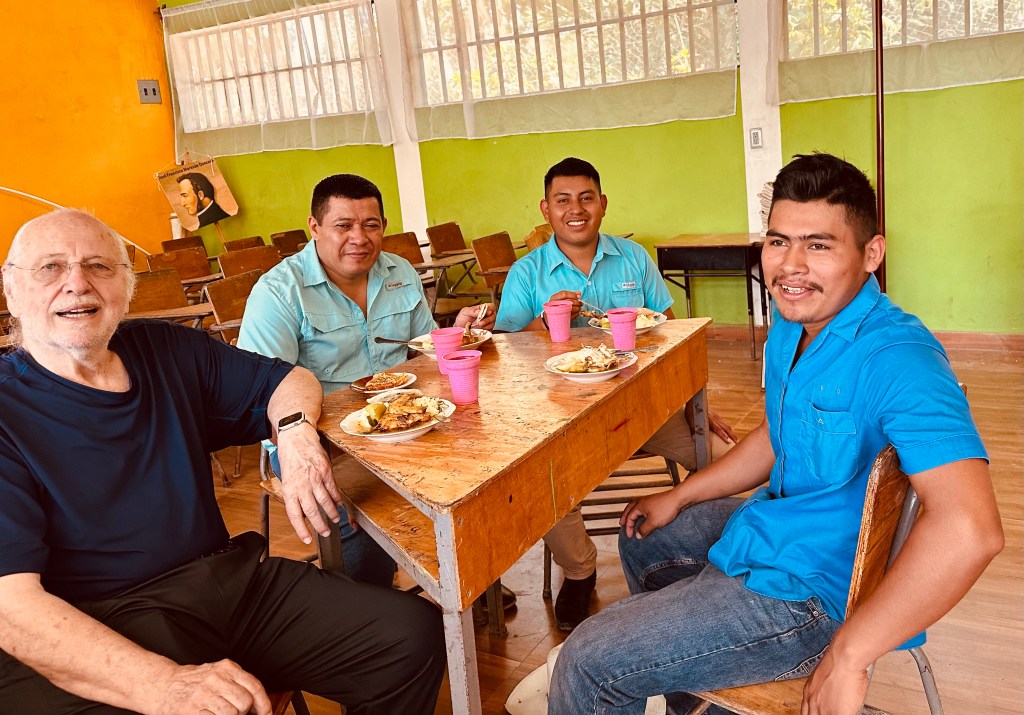
Today I visited the Ch’ortí Indian village of Gotas de Sangre where for the past several years I have spent time and energy helping the local school and students prepare for a better future through education. Today, along with Fr. Marco Arevalo, Lic. Jorge Vasquez, and Lucas, the caretaker of the Episcopal mission of Gotas de Sangre we reviewed fiscal improvements to the school facilities. During the last two years, World Vision has provided this school with school supplies and building materials making possible the new restrooms now being installed. And Church of the Incarnation of Dallas (COTI) has also supplied funding for bathroom and other improvements in the school’s kinder program. The total enrollment of this public school today is now reaching close to 300. Today, the teachers were attending a teachers conference in Santa Rita and this gave me time to examine the new bathrooms and other improvements being installed at the school.


During the past six years, this school has become a model school. Seven years ago, the enrollment of grades 1 through 6 totaled about 80 students. For the past few years, 10 additional communities have begun sending their students to what is now the regional educational center. This school is now teaching students through the 9th grade. And with the help of COTI, many students are attending high school, grades 10 through 12. In the past two years, students have graduated from high school and several are continuing on to university studies. One student has completed his bachelor’s degree and has returned to the community to teach high school classes.
I can’t tell or write about the joy and satisfaction I get watching these students and community grow. The school has become an institution promoting education to its community. Parents are becoming involved with their students’ learning process and taking pride in their community. Seeing that education for their children is a possibility, they are sending their young to school, even high school knowing that their kids will have opportunities never available to them. This is learning at its highest calling.
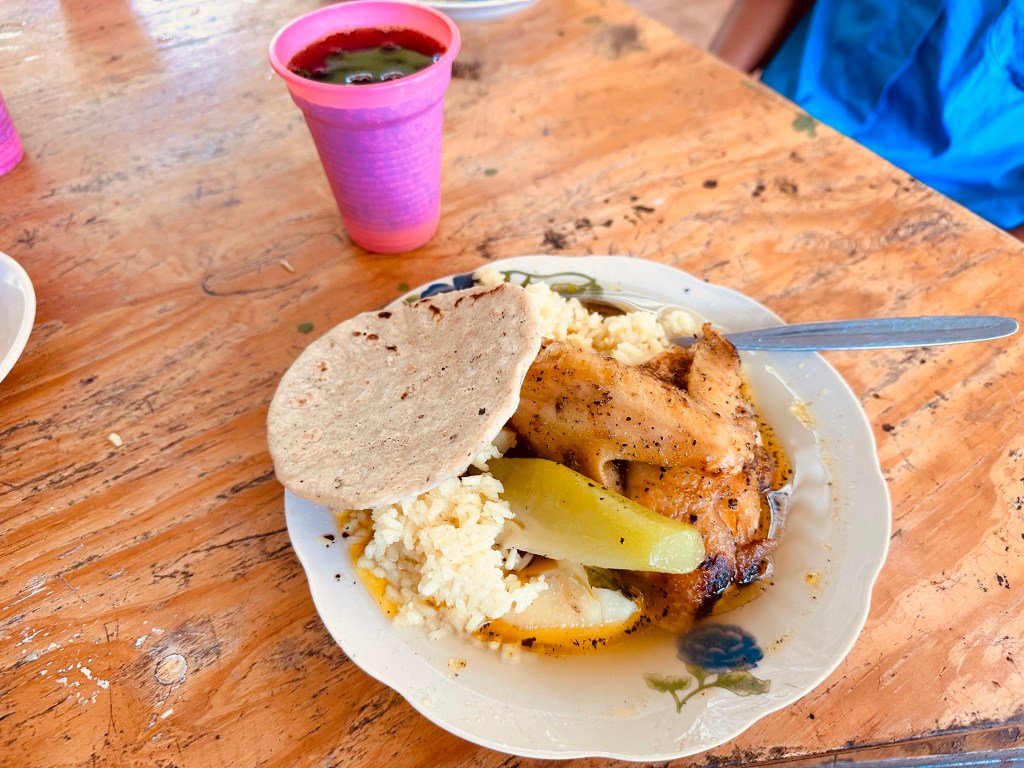
The primary foods of the Ch’ortí people were based on their traditional agricultural practices. They cultivated and relied on a variety of crops for their sustenance for the past 2000 years. The main food staples of the Ch’ortí people included:
1. Maize (Corn): Maize was the most important crop for the Ch’ortí people. They cultivated different varieties of corn, such as white, yellow, and multicolored. Maize was used to make tortillas, tamales, atoles (a type of corn-based drink), and other traditional dishes.
2. Beans: Beans were another essential crop for the Ch’ortí people. They cultivated various types of beans, including black beans, red beans, and kidney beans. Beans were often cooked with maize to create a nutritious and protein-rich meal.
3. Squash: Squash, including varieties like zucchini and pumpkin, was grown by the Ch’ortí people. It was used in both savory and sweet dishes, such as stews, soups, and desserts.
4. Chilies: Chilies were an integral part of Ch’ortí cuisine, adding flavor and spice to their dishes. They used a variety of chilies, both fresh and dried, to enhance the taste of their meals.
5. Root Crops: The Ch’ortí people cultivated root crops such as sweet potatoes, yucca, and taro. These crops provided a source of carbohydrates and were used in various culinary preparations.
6. Fruits: The Ch’ortí people also enjoyed a variety of fruits that were available in their region, such as bananas, avocados, mangoes, papayas, and pineapples. These fruits were consumed fresh or used in dishes and beverages.
7. Wild Game and Fish: In addition to agriculture, the Ch’ortí people relied on hunting and fishing to supplement their diet. They hunted animals like deer, rabbits, and wild birds, while fishing provided a source of protein from rivers and lakes in their region.
These primary foods formed the foundation of the Ch’ortí diet, providing them with sustenance and nutrition. The combination of these crops and the traditional culinary techniques used by the Ch’ortí people created a diverse and flavorful cuisine that is still celebrated today.

 CubieSphere