
Paralife
Community Needs Reveals God’s Will
“Hi Cubie,” the voice on the other end of the phone rang with excitement. “This is Steve from Dallas. Our church raised $6000 for medicine and we want to come next month with a medical mission team. Two doctors, six nurses, and ten helpers will make the trip.” Earlier I had invited Steve and his church to El Salvador for a short mission project. At the time of the invitation Steve nor I knew exactly when a team could come nor where they would work. I felt confident that at some future time Steve would bring a mission team to our country. For the previous eight years his church had sent building and evangelistic teams to Latin America, Africa, and Alaska to build churches. During recent trips to Latin America, the poor and hurting people living near the new church structures they were building had acutely influenced the mission teams. Steve had felt certain that by witnessing these needs, God had spoken to him to do something for the poor. On his last building trip to El Salvador, he and I spoke about a project that would involve his mission team directly with a needy community. At 5:30 AM I was not surprised to hear his voice.
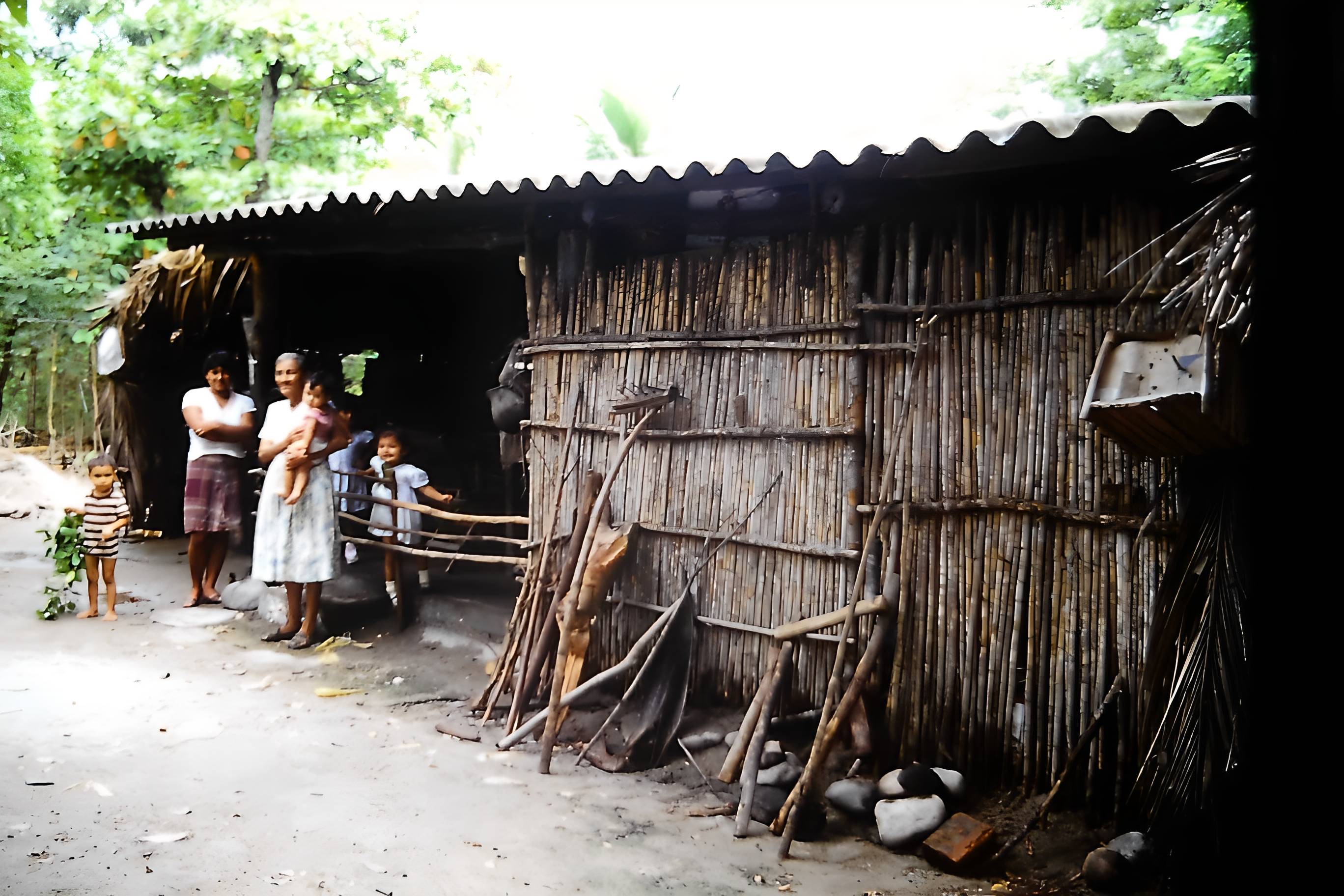
It never failed! Everytime a significant need was recognized in a needy community, God always supplied the need. During the previous two weeks, I had been visiting La Victoria, a community located on the dividing line between Sonsonate and La Libertad, two states in El Salvador. Over the weekend, prior to Steve’s Wednesday morning call, a local pastor carried me to visit the community. Children played beneath a variety of cedar and maquilishuat trees in the courtyard of the old hacienda. Women, scattered around the courtyard, stirred pots of beans and wiskell. Old men sat around in groups of four or five talking. The pastor carried me to the westside of the courtyard and pushed open a door. Inside he introduced me to Eusebio, a man about thirty-five, then to his son, Jacobo. Both were sick with acute cases of dysentery. The pastor then looked at me and said in a voice that belied his alarm, “Over half the community is sick and near death” At the moment there was little that I could do but pray.


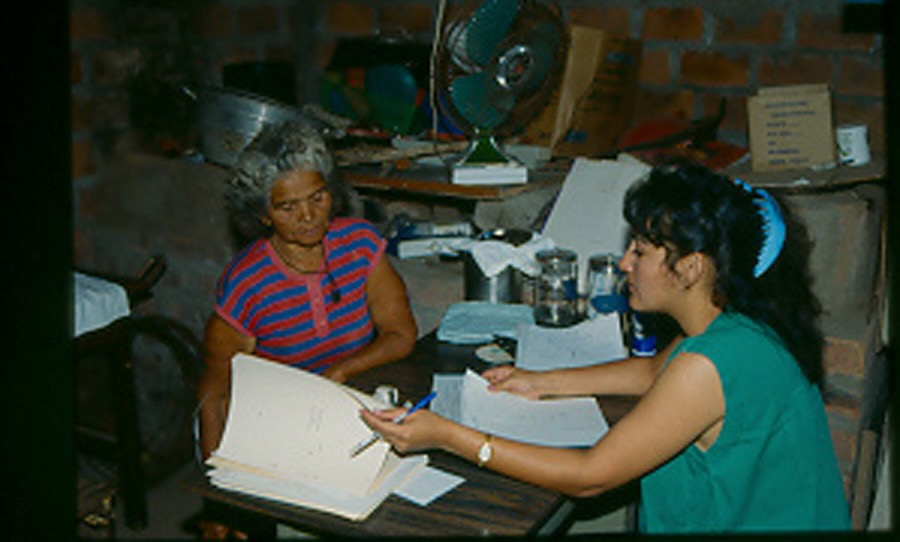

Steve’s call was the answer to prayer. “Steve” I said in a sleepy haze, “you and the team will be working in a community called La Victoria. How soon can you get here?”
About six weeks after Steve’s medical team had left, a young missionary, Dan Bowden and I visited La Victoria. To my consternation, I found some of the very same people who had been treated for parasite infestation complaining of the same symptoms. Little children walked around sluggishly and spiritless. Young women held their stomachs and complained of diarrhea and old men grumbled about headaches. After the medical visit, these people had returned to their same little houses and followed the same eating behaviors as before. Some had received medicine that for a time relieved their parasite induced suffering. Then they proceeded to live in the same unsanitary conditions, eat the same foods, and drink the same infested water and consequently, their original parasitic infections returned with the same miseries as before. The medical team visits had relieved their immediate suffering but had not taught the poor, unfortunate people how to prevent those sicknesses. The good-hearted physicians only treated the human symptoms that they saw. In subsequent visits to La Victoria I found people who had been treated for hypertension but later they needed follow-up attention by a local physician. In La Victoria I found people who had been treated for stomach disorders, but they too needed additional medical attention. They needed to see a physician. With all the good that the visiting medical team provided, the same people needed medical help. They had not been cured, rather their symptoms had been salved. They were sick again and they needed quality, local health care.
A Real Need for a Poor Peoples’ Clinic
After the visiting medical teams left, I was left with the job of seeing those patients who needed medical follow-up were taken to a local physician. This usually required hours or even days of travel taking people back and forth to clinics. One evening after spending several hours waiting for patients at a local clinic, I made an off-handed remark to Pastor Hector Bojorquez about my new “taxi-service” ministry. Sensing my frustration he suggested that a clinic dedicated to the poor would be useful. It was a good idea; why not start a local, outpatient clinic where those that needed follow-up services could come and be treated? A clinic could also provide vital resources for community development programs. An outpatient clinic would be able to provide ongoing care to the rural communities like La Victoria. During the following days, I spent a lot of time praying and letting the idea develop. Soon I was convinced that God was really speaking, not so much about a clinic, rather, God was speaking about his love and concern for the poor. I had already learned that God performed miracles in order to help the poor. During the early 1980s there were communities like La Victoria throughout the tiny nation. People were dying daily from treatable diseases such as parasite or bacterial infections, gastrointestinal ailments, respiratory disorders, and a endless list of other sicknesses. Without doubt there was a real need for a clinic, and I felt that God would be pleased of the evangelical church built it. This would not be just another medical clinic, rather this clinic would be one dedicated to spiritually and physically ministering to the poor and needy.
I began looking for an adequate place to develop such a clinic. My idea was to find a two story house next to one of the many displaced people’s quarters in the city of San Salvador. The idea was to put a couple of consultation rooms downstairs and my office and that of the physician on the second floor. By locating next to a community of displaced people, we could evaluate an entire community. In this way, we would have some basic information on community needs and resources while also establishing a base level to determine our ministry’s impact on the community.
On one occasion, I found a house that I thought would fully satisfy these conditions. I called the real estate agent in charge and set a time to meet and look at the property located next to the refugee camp, La Fortleza. For two hours I sat in front of the house waiting for the agent to arrive. In exasperation I finally called the agent to inquire as to why he was so late. He informed me that the house had been rented that morning. Well, so much for that idea.
A couple of months later, I was sitting in the office of the president of the Evangelical University discussing the possibility of a University/Paralife sponsored medical project. During the conversation, I explained my vision for a medical clinic that would minister to the needs of the poor. At that moment, he pointed his finger at me and said, “come with me and I will show you where you should establish your clinic.” We drove over to the Evangelical University medical school. After getting out of the car, he looked at me and said, “You should not tell anyone yet, but we have just signed a contract on another property for the medical school. We have outgrown these facilities and need something larger. Why don’t you take this property and build your clinic here?”
We walked through the facilities inspecting all the rooms, labs, classrooms, and auditorium. I was totally dumbfounded. Remember, I was looking for a little house, not almost half of a city block. We discussed the university’s contract with the owners and what the newly founded Paralife organization would need to do to renew the contract. As the university president and I parted company that day, I stood in the gate of the property still staggering from the opportunity. It was by far a greater property than I had envisioned and the responsibility was by far heavier than I had anticipated. But as I stood there in the gateway, viewing the grounds and the buildings, I had a good feeling about the place. Some may call it emotions, but I call it the confirming presence of the Holy Spirit.
For two weeks I prayed about the project and talked to some trusted confidants. Then I met the university president again and made the following offer of “negative faith:” If the Lord did not say ‘no’ within the next ten days, Paralife would take the property and build the clinic there.
For the next ten days, I prayed a lot. I wanted the Lord to have every opportunity to say NO. But during those days, I heard absolutely nothing from above. Still wondering if I was making a terrible mistake, on the tenth day I went to the president, confirmed the contract and accepted responsibility for the property.
Some may say that the following events were accidental or by chance. I believe that regardless of whatever caused the following events, they were signs from God that I had heard Him and was in His will in building the clinic. Incidentally, I had not written one person about this possible site for a clinic. It was such a ridiculous idea that I wanted no one to know about it so that if the proposal fell apart, I would not have to ashamedly admit that I had failed to carry out the grand scheme. Two weeks after accepting responsibility for the property, an evangelist called to inform me that he had accepted some hospital equipment as a donation. He wanted to know if I could use a million dollars of hospital equipment. Of course, an outpatient clinic could not use all this hospital equipment, but we could use much of it. It was a confirming sign that the project interested God. But five days later, as though the first sign was not enough, a friend called to say that he and his wife felt that God wanted them to increase their contributions to my work by $12,000 annually. The very next morning I received a call from a pastor friend in Florida with whom I’d become friends less than a year earlier, telling me that his church had decided to contribute $15,000 annually to this work. Some may say it was just an accident, but I had calculated that the monthly rental and utilities would cost about $2500 monthly. Accident, or was God really concerned about the poor and needy?
God speaks into His kingdom in many ways. He let me see this community and its needs; young people were dying, children were wasting away, and old people were hopeless. Foreigners had come and helped by giving beans and clothing. Some missionaries had even distributed an abundance of “over-the -counter medicines.” Although well intended, this help was insufficient. A constant, functioning clinic was needed that could continually supply medicine and medical attention. It was through the need that God let me see his will and He willed good for his creation.
Young people came from various parts of the world to help build the clinic. I did not send out a call for people to come; the Holy Spirit sent them to El Salvador to fulfill a special task. One young man came from Africa and assumed responsibility for the design and construction of the clinic. Another young man came from Texas, a plumber by trade, and he assumed the responsibility for the clinic’s plumbing. Other young people came from Colorado, Missouri, and Florida. These young people assumed responsibility for helping in the relief efforts among the displaced poor. As their responsibilities for construction were completed, they went on their way, just as quietly as they had come. They had been called to fulfill a specific task, and once that task was completed, each went on his way.
During the construction phase, money was always scarce. Cement, cinder blocks, plumbing supplies, and other building needs represented thousands of dollars. Churches and civic organizations from all over the United States and some from Europe sent money; often these donations arrived just at the very moment of need. However, one event will always stick in my mind. We had just initiated the construction of the clinic when the national postal system went on strike. This strike lasted about two and a half months. No mail came in or went out through the national postal system. About the time the mail strike began, Evangelist Don Evans and an Ohio businessman, John Crockett visited the project. As much as I could I explained to these brothers the vision that God had placed in my heart. At the end of the day these two brothers went on their way happy that God’s kingdom was well in El Salvador. Often, before the strike, the mail would bring a few dollars just in time to meet various expenses. On this special occasion, money, as was often the case, was in very short supply, and clinic construction was at a critical stage. I had decided to cease construction for a while. Suddenly the postal union and the government reached an agreement and the post offices opened. I went to the post office and collected eleven weeks of mail. In the mail was a letter from Ohio. The letter, detained for ten weeks, contained a check for five thousand dollars. The building continued, and the clinic was completed. Without doubt, my faith was tested.
Larry Jones, a Baptist Evangelist, supplied much of the equipment and many thousands of dollars that were required to finish the clinic. One very faithful Christian businessman wanting to do something in memory of his son killed in an automobile accident, donated a very sizable contribution that enabled us to finish construction of the clinic. In memory of this man’s son, we named the clinic, the Dan Mugg, Jr. Memorial Clinic. This was not an attempt to honor the dead, rather, it was appreciation for a man’s faithfulness without which, the Paralife clinic may have waited months for completion. Because many people honored God with their contributions for the Paralife project, the clinic was completed and many thousands of people were provided healing within its walls.
Afterwards, we hired a Salvadoran medical doctor to be the medical director of the new clinic. A lab technician and other technical people were contracted and brought to the clinic. Their purpose was to minister healing to the many sick and needy among El Salvador’s rural and urban masses. The functioning clinic was an affirmation of God’s concern for the poor.
The Paralife clinic focused on curative healing. However, a vital part of Paralife’s ministry concentrated on preventative healing. Preventative healing is a critical part of community development. It supports the economically deprived by teaching them how to prevent sickness and maintain good health. Preventative health concepts are development tools that help those economically bereft claim control over their immediate environment while reclaiming their human dignity and desire to be self-supportive. The Paralife clinic’s original purpose was to support these development efforts in rural areas. Paralife’s development ministry focused on the rural areas where great needs existed among those displaced by the civil war. During those years it became obvious that we needed more help. Our greatest need was not medical supplies or medicine, food, or clothing; our greatest need was people. We needed people willing to let God use them as instruments to relieve misery and suffering. We needed people who understood principles of God’s kingdom.
People Can Make a Difference
From the early beginning, God prepared special people to be part of Paralife’s development. These special people were young men and women eager to help save the lost while bringing physical and social healing to the hurting people of El Salvador. The creation of Paralife was part of God’s plan to present His kingdom as a small microcosm, a means of seeing God’s larger kingdom through a small model. In order for Paralife to be the model, it was necessary that Salvadorans have significant rolls in the management and direction of the Salvadoran organization. It was important that some people are able to teach and share the gospel, but it was also important that others share the vision and direction of Paralife. One of the people that God chose to be part of Paralife was Jorge Martinez, a local attorney. God had claimed Jorge in 1981. Soon afterwards, he began preaching and proclaiming the gospel of Jesus Christ. Six months after Jorge’s salvation, he and I met. Since then, our paths have been inseparably intertwined.
Jorge had been raised by a grandmother on a farm outside the city of Santa Ana. He had learned the ways of the campisinos early, and this had given him a heart and compassion for their plight. The young lawyer, filled with Christ’s love and a equitable concern for the campesinos, preached the gospel in the barrancos, prisons, National Guard and National Police barracks, and anywhere else that opportunity occurred..
Jorge’s ability to present the gospel clearly and concisely was just the beginning of God’s plan for his life and the future roll that he would play in God’s kingdom. His preaching and testimony identified him as a true Evangelical. Immediately after the Jutiapa and El Espíritu Santo experiences, the idea of Paralife began developing. I shared that vision of Paralife with Jorge. Jorge was strategic in this process of developing and legalizing Paralife in El Salvador. As Jorge shared the gospel with the poor and as we shared the vision of Paralife, God also placed within this man of God a vision of God’s kingdom.
Often Jorge and I would travel to small villages or communities to share the gospel. On these trips we would share the vision and talk about God’s plans for El Salvador. Without doubt, God was forming in Jorge the same vision that God had initially entrusted to me. During those early days, while I developed and organized the operations of Paralife, Jorge wrote and followed the incorporation papers through the government bureaucracy. Then he worked getting permission for containers full of medical equipment to dock and unload at Paralife. At times, due to the rigors of Civil War, restrictions on tourist visas made it difficult for visiting teams who came to evangelize or erect buildings; Jorge was always able to influence enough people to get the appropriate papers signed. And even in hard times, he and his wife loaned money to the new struggling organization so that workers never missed a payday. God used all these activities to form in Jorge’s heart a vision of how the church was really to be a microcosm of God’s kingdom on earth. Without doubt, Jorge too had seen and understood the vision that Paralife was to be an extension of Christ’s body reaching out to the poor, hurting, and unfortunate of El Salvador with a message of hope and healing.
From 1983 until mid 1985, Paralife grew very fast. One reason that Paralife grew so rapidly was simply due to the vast number of people who needed help. El Salvador is the most densely populated nation in the Western Hemisphere, and during these years of civil war, thousands of people were affected by the violence. The violence pushed people from their small, adobe homes. The most popular places for these dislocated people to seek help were in displaced people camps. Many of these camps appeared, almost over night, around the provincial department capitals. Paralife had no trouble finding people who needed help.
Another reason why Paralife grew so rapidly was that God answered our prayers by sending financing from many church groups in the United States and even from Europe. The financing made it possible to hire sufficient numbers of Salvadoran people with adequate training. We were able to find Salvadoran medical doctors, nurses, technical help, and development specialists. These talented and generous Salvadoran people worked long hours in the displaced peoples camps bringing healing and caring to those who had been ejected from their homes and gardens. Others worked developing communities by teaching health and nutrition classes. And still others provided support to these efforts by delivering health care at the Paralife clinic.
By mid 1985 I was very aware that I needed help in managing this growing ministry. I realized that we needed a chief physician who could oversee the operations of the clinic. But I also realized that we needed a public health specialist who could oversee the community development programs. And, too, since I was traveling much of the time raising funds, we also needed someone who could coordinate the activities between the central clinic and the community programs. I shared these concerns and needs with Jorge Martinez and Pastor Hector Bojorquez, people with whom I often prayed who were both members of Paralife’s board of directors. We began to pray for someone, a Salvadoran, who was a clinician, a public health specialist, and an administrator. We prayed that these three qualities be in one person. We together prayed that God would send this person as quickly as possible.
Two months after starting this prayer, Bill and Libbey Stennett, Southern Baptist Missionaries, brought to my office Dr. Luis Palma. Dr. Palma was a pediatrician; he had just finished his post graduate public health program in Puerto Rico and had experience in administrative responsibilities. Two months later, I hired Dr. Palma, and for the next five years he successfully managed the growing Paralife project. One of the primary qualities that Dr. Palma brought with him to Paralife was his ability to integrate Paralife with other Christian and secular organizations. His ability to create friendships with other leaders brought to Paralife new ideas, methods, and technical and material support. These were invaluable aids to Paralife during the last half of the 1980s. Paralife was able to reach more people with more services than ever before. God’s kingdom increased.
Two important people that Paralife’s board of directors also contracted were Dr. Victor Rivera and Dr. Martha Martinez. Dr. Rivera was a surgeon who also had post graduate studies in public health. When he came to Paralife, he was dean of the Evangelical University medical school.
Like Dr. Palma, Dr. Martha Martinez was a pediatrician. For several years she had worked with the Salvadoran Ministry of Health. Although she was not theoretically trained in public health, she had far more practical experience in the field than did either Dr. Palma or Dr. Rivera. Under her guidance, Paralife’s community development programs ministered to rural mothers helping them provide health for their families. Nutrition programs for malnourished children were initiated in Colima, Porfiado, and other communities. Purified water wells and water systems were provided to Colima and Porfiado. In all, she guided programs that reduced infant mortality rates from 125 deaths per thousand to 54 deaths per thousand. Her programs also reduced illnesses related to malnutrition in all areas where Paralife programs were functioning.
The significance of these events was that God had used young North American people to initiate and move forward a special project. The presence of these young visitors to El Salvador was significant. Not only did they perform a vital service, they also provided a glimpse into God’s kingdom. Many provided a service, then left the country. Others stayed on for various periods of time. Salvadoran saw people willing to give their time and money to help those in need. As a consequence, Salvadorans were challenged to participate in the rebuilding of poor-peoples’ lives. Many Salvadoran rose to the occasion and accepted the challenge to heal their country. Paralife became a means to that end. Within a short time Salvadoran personnel filled the important and functional positions that God used to heal their land.
The Purpose of the Church
Clean water and a house empty of pigs and chickens may well have saved Beto’s life. Beto’s mother had no understanding of germs or bacteria. She could not have understood that waste dropped on her earthen floor by domestic animals contained minute life forms that were deadly to herself and her children. She could not have understood that contaminated, stagnate water killed humans.
Her primary goal was daily survival, and that reduced her to an inhuman level. God did not create humans to be mere animals. The animals and plants were good creations, and they were meant to be good for supporting humankind who was given dominion over them. At creation God gave life to humanity and all that was necessary to sustain that life. Humanity was created in the likeness of God. That likeness gave humankind a spirit of dignity and a self-appreciation that separated itself from lower animal life.
When humankind is reduced through poverty to animal levels, all emphasis is on survival. At that point humanity has lost its God given advantage over lower animals and is at the mercy of its own animal instincts. Survival becomes an individual challenge rather than a community strategy. This occurs when Christian social relations have not developed between people who live nearby. Christians, although living in conditions of extreme poverty, can form communities that help each other survive the challenge of poverty. These actions demonstrate Christ’s love for fellow man, and this is the essence of life; this is life in God’s kingdom.
From the beginning, Paralife was to have been an example of God’s kingdom on earth. One basic teaching from a previous chapter was that the church should be a microcosm of God’s kingdom, a microcosm in which human life was valued only on the basis that it is human life. In Paralife, “life” was to be found and shared with those that God brought into our pathway or into our microcosm. Life was what God had given at creation and it was life that Christ expected his followers to share.
Christ did not ascend to heaven until he had formed his church, his body, on earth. That body was to have continued His work on earth. Simply speaking, Christ’s work on earth was to preach the gospel to the poor, heal the broken bodies and hearts, feed the hungry, clothe the naked, and visit the lonely. (Matthew 9:35; 25:31-46; Luke 4:18,19) His body, the church, was given the responsibility of continuing that work on earth. This responsibility caused the church to be interested not only in the spiritual needs of humankind but also in the material needs as well.
As Christ’s representative and body on earth, the church that feeds the hungry, clothe the naked, and cures the suffering is doing what was natural to Him. The self-perception of the church should be as exact a representation of Christ and his actions as possible. Feeding and clothing the poor, healing the sick, visiting the lonely, and preaching the gospel of the kingdom should be the primary function of the church just as it was Christ’s actions on earth. Only when projecting itself by doing these acts is the function self realized. Only when doing by nature (because it is the true self) what Christ did while on earth can the church really say that Jesus Christ is doing His work. Otherwise, if we are not doing what he did or if we are modeling or copying someone else, it is only human effort.
Maybe an example will help explain what I mean. A light bulb exists to give light. Its very essence is light. Therefore, when it is functioning in its natural role, it is giving light. Yet there are uses of light bulbs that are apart from their natural function and outside their essence. Some light bulbs come in different shapes and different colors. The purpose of different colors and shapes is determined by conditions outside the light bulb; a secondary purpose is imposed on the light bulb from outside itself. For instance, someone designs a special light fixture that requires a specially designed light bulb. The newly designed light bulb gives added style to the light fixture. Therefore, the light bulb begins to serve an additional purpose other than giving light. Now the purpose of the light bulb has been altered, and it serves a secondary purpose. The secondary purpose is imposed upon it by the wishes and desires of people who want more from the light bulb than simply light. The original purpose of a light bulb was to give light; now light bulbs serve additionally as articles of decoration.
God had an original purpose for the church. That purpose was to be the body of Christ on earth to continue his work. His work was the essence of the church. Its self-perception was to have been realized in that work. However, if people required from the church actions that were not part of God’s original purpose, then the church (and its purpose) was being shaped by forces outside itself. Its self-perception and its essence are changed just like the decorative light bulbs. The only way that the church can realize the original purpose for which God established it is to preach the gospel of the kingdom to the poor, feed the hungry, clothe the naked, and visit the lonely. Much of what the church is used for today is secondary to God’s original purpose and therefore destructive to God’s kingdom.
The purpose of Paralife was to demonstrate God’s glory on earth by being a microcosm of God’s kingdom. The goal that God gave to this North American missionary was just a vision; it was a road map that guided the organization toward its fulfillment. My purpose was to initiate the vision and produce the organization, Paralife. I was to give it direction and set its course, but the fulfillment of the total vision was much larger than just one person. Many people had to be involved in the organization if it really was to be a microcosm of God’s kingdom. Salvadoran, North Americans, and Europeans would all work together to bring about this microcosm of God’s kingdom.
A Weighty Responsibility
People came from all over the world to help with the clinic project. From Africa came one young man. Another group came from Europe. Many came from the United States. But in the end, most of the help to get the clinic operating came from El Salvador. As mentioned earlier, God wanted this project to be a Salvadoran enterprise.
Help came from different churches to meet the needs of the clinic. Materially, most of the money and equipment came from Southern Baptist churches and organizations. Additionally, much of the operating expenses came from Assemblies of God and charismatic churches. Individuals also gave generously for construction needs. From the very beginning it became apparent that God wanted the clinic and its function be His work and not that of a single church group. As a ministry, Paralife was to transcend denominational boundaries. Its function was to represent Christ’s body to the hurting and needy. It seemed that God was saying that Paralife was to be transdenominational, a true microcosm of God’s kingdom.
During the building years, many people assumed that Paralife was a development agency; they were wrong. Paralife was conceived and developed to be a Christian, faith ministry. There is a difference. Agencies have to worry about the bottom line. They have to be assured of a certain income in order to hire people and make contracts. As a faith ministry, Paralife ministers both to God Himself and as a representative of God. As such, I have always believed that God would supply Paralife’s material needs. For instance, building plans were determined by the amount of money available. If we had money to build a wall, then we built a wall. When money was available, we then put the roof on. Had we waited until all the funds were available before initiating construction, the Paralife clinic would still be only a dream and a vision. Though from time to time, money and supplies were scarce, He always supplied. Very often, on payday morning, there would not be sufficient funds to meet payroll. But never did we miss payroll. God always supplied by one means or another.
During and after construction of the clinic, God showed his mercy and blessings in a variety of ways. He always sent the right people with the right talents. Physicians, public health experts, nurses, technicians of all types, nutritionists, social development specialists, and ministers of the gospel. Young people, old people, people who spoke no Spanish and people who spoke no English came and worked on the project. North Americans who could barely afford to pay their fare to El Salvador sacrificed to build the clinic. Salvadorans who could not believe that gringos cared so much about their country also were moved to make sacrifices for the clinic. The clinic was truly a transdenominational effort whose purpose was to demonstrate the ethics and principles of God’s kingdom on earth.
The miraculous means that God used to establish Paralife and the Dan Mugg Jr. Memorial Clinic are far beyond my ability to understand or explain. However, I am convinced that it was God’s sovereign Word that brought together all the different elements necessary to complete the vision. God acted upon my heart and designed a vision; He then acted upon the hearts of hundreds of other people to supply necessary talent, labor, and money to cause the vision to materialize. Then God acted upon the hearts of dozens of Salvadoran doctors, nurses, teachers, technical people, and pastors to fill the personnel requirements. It must be totally understood, no one individual caused Paralife to come into existence. Paralife and its purpose are a sovereign work of God. Therefore, the leadership of Paralife has an awesome responsibility to seek God’s direction in each and every decision. Paralife was a creation of the Spirit and it is a weighty responsibility to never permit such a Spirit inspired ministry to become a mere human institution.
Christian Development A Model For Latin America
As the Holy Spirit continued to develop the concept of Paralife, long before the first brick was laid for the clinic, I felt that what God was doing would be a model for other Latin nations. Jorge and I had often discussed the needs of the Salvadoran displaced and how our development project could serve as a model for others. Had Paralife been simply another development agency, then there would have been no special characteristic for other nations to model.
But Paralife was different. Its very nature was different. Its purpose was to change people, and then guide those same people as they changed their environment. In Paralife’s method of development, Christ was the primary focus of development. As devoted Christians, we recognized that people changed their own environment. Real social development starts in the heart. Therefore, if people’s hearts to not change, then true developmental changes could occur. If development takes place, first the heart must be changed. Christ changes the heart of humankind and then environmental changes will be easier to teach and learn.
On one occasion in 1987, a group of visitors came to Paralife with the purpose of understanding our methods. The group was mostly North Americans but there was a good sprinkling of Latin Americans as well. In discussing our program of community development, one of the visitors suggested that our program of development was very similar to the one their organization used; it was a textbook pattern of development, he suggested. “Yes it is a textbook plan of development,” I responded. “But with one big improvement. We also present Christ as the model of development. As He changes peoples’ hearts, they then want to change their own environment.” Good community development starts with the heart, not with the environment. Good and solid development works outward, not inward.
Paralife was formed to be a microcosm of God’s kingdom. That is, there were people of many different religious traditions and denominations in Paralife. One could visit Paralife for a few days and hear people with different theological opinions. Such a ministry had the advantage and strength of a greater perspective of God’s kingdom. No one denomination can perfectly reflect God’s kingdom for God entrusted to many denominations parts of His truth. As more of these parts of His Holy truth interact by working together to fulfill God’s purpose, then the results will be a greater reflection of God’s kingdom. A more perfect attempt of doing Jesus’ work on earth will result with greater unity in Christ’s own body.
The method and means by which Paralife went about its work of providing a ministry to the poor of El Salvador is a prototype that other Christian organizations can follow. In 1986 a group of international visitors visited and evaluated the Paralife offices, clinics, and programs. Among the group was a Mexican minister who directed an orphanage in Júarez. He returned to Júarez and started a similar ministry. The same happened in Colombia and Chile. Since those days, people have come to understand our methods from Guatemala, Honduras, and one visitor came from Ghana, Africa. As Paralife continues to develop its ministries, other will come to understand and copy a program that only the Holy Spirit could have initiated.
August 1992

 CubieSphere